Reading guide · study guidance
Before you begin
Study guidance · not Scripture. AI-assisted writing and automated content review; no individual pastoral endorsement is claimed.
Sources: Updated World English Bible: 2 Kings 5 · Berean Standard Bible: 2 Kings 5 · World English Bible information and permissions · Berean Bible Terms and Conditions
Reading guide · study guidance
Begin with the message, not the most powerful person
Read 2 Kings 5 once without drawing. Then return to verses 2–10. A captive girl recommends a prophet, but a royal letter arrives at another king's court. Following those small changes explains why the message causes alarm before Naaman reaches Elisha.
Scripture observation: The girl's words concern the prophet in Samaria. Israel's king reads a request addressed to him and suspects an attempt to provoke a quarrel (5:3, 6–7). Elisha then sends word that Naaman should come to him (5:8). A prestigious recipient and the person who supplies the instruction are different people.
| Stage | Message route and request | What the story actually reports |
|---|---|---|
| 5:2–4 | A captive Israelite girl tells Naaman's wife about the prophet in Samaria; her report reaches Naaman's master. | Her recommendation concerns the prophet. The chapter does not describe a conversation between the girl and Elisha. |
| 5:5–7 | The king of Syria sends a letter with Naaman to Israel's king, asking for Naaman's healing. | Israel's king receives the letter and fears a provocation. Receiving a request does not mean he has the ability it assumes. |
| 5:8–10 | Elisha sends word to Israel's king; Naaman comes to Elisha's house; Elisha sends a messenger to Naaman. | Elisha directs Naaman to wash seven times in the Jordan. The instruction arrives through a messenger, not a personal appearance. |
| 5:11–14 | Naaman voices his expectations and objections; his servants urge him to reconsider. | He had expected Elisha to come out and act in a particular way. After his servants speak, he follows the instruction and the narrator reports his restoration. |
| 5:20–22 | Gehazi pursues Naaman and claims that Elisha has sent him with a request. | This is Gehazi's claim. It conflicts with Elisha's refusal and Gehazi's own stated plan to obtain something. |
Sources: Updated World English Bible: 2 Kings 5 · Berean Standard Bible: 2 Kings 5 · World English Bible information and permissions · Berean Bible Terms and Conditions
Reading guide · study guidance
Separate the instruction from Naaman's expectations
Naaman expects Elisha to appear, invoke the LORD, and act over the affected place (5:11). Instead, a messenger delivers the instruction at 5:10. Naaman also objects to the choice of river (5:12). These are his reported expectations and objections; they are not a description of what Elisha promised beforehand.
His servants bring him back to the instruction he actually received (5:13). Their question asks him to compare a great task he would have attempted with this simpler one. We can observe their reasoning without inventing a sarcastic, timid, or soothing tone. Verse 14 then reports what Naaman does and what happens.
Sources: Updated World English Bible: 2 Kings 5 · Berean Standard Bible: 2 Kings 5 · World English Bible information and permissions · Berean Bible Terms and Conditions
Reading guide · study guidance
Follow the separate gift route
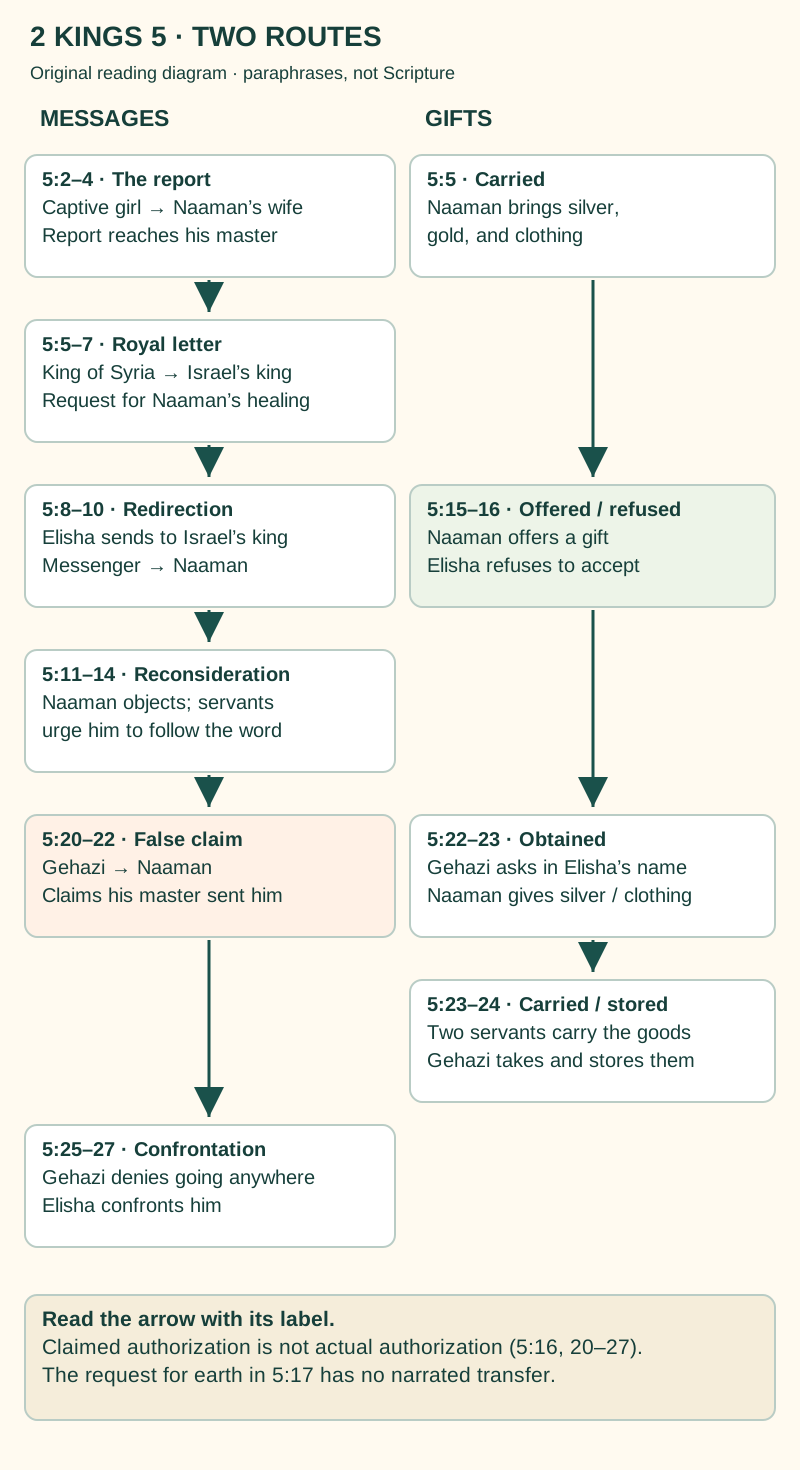
The money and clothing travel with Naaman before his restoration. Later he offers a gift, and Elisha refuses it (5:5, 15–16). Keep the later events attached to their own speakers: Gehazi announces his intention to get something, then tells Naaman that his master has sent him (5:20–22).
| Gift stage | Direction | Evidence and limit |
|---|---|---|
| Carried, 5:5 | Naaman travels with silver, gold, and clothing. | Possession on a journey does not prove that a payment was accepted. |
| Offered, 5:15 | Naaman offers a gift to Elisha after returning. | The offer follows the narrated restoration in 5:14. |
| Refused, 5:16 | Elisha declines, even when urged. | Do not draw an arrow showing an accepted gift to Elisha. |
| Falsely requested, 5:22 | Gehazi asks Naaman for silver and clothing in his master's name. | His story about two visiting young men is part of his claim, not an independently narrated arrival. |
| Given and carried, 5:23 | Naaman gives two talents of silver and two sets of clothing to two servants to carry ahead of Gehazi. | The verse records an actual transfer. It does not record the gold being handed over. |
| Stored, 5:24–27 | Gehazi takes the goods from the servants and stores them; Elisha later confronts him. | Gehazi's denial in 5:25 is another character statement to check against the narrated action. |
Verses 17–19 also contain Naaman's request for earth and his concern about accompanying his master into Rimmon's temple. Read that exchange before moving to Gehazi. The text records the request for earth but does not narrate its transfer; a gift diagram should not turn a request into a completed delivery.
Sources: Updated World English Bible: 2 Kings 5 · Berean Standard Bible: 2 Kings 5 · World English Bible information and permissions · Berean Bible Terms and Conditions
Reading guide · study guidance
See both routes together
Editorial reading method: The diagram separates communication from actual movement of goods. Arrows identify a route, not approval of everything said along it. The warning on Gehazi's message matters as much as the arrow itself.
Sources: Updated World English Bible: 2 Kings 5 · Berean Standard Bible: 2 Kings 5 · World English Bible information and permissions · Berean Bible Terms and Conditions
Reading guide · study guidance
Fill eight arrows from the chapter
Use the complete printable worksheet or write the answers beside the chapter. Supply the missing person or group and underline the supporting verse. Check an uncertain answer by rereading; this is a reading exercise, not a measure of faith.
The captive girl → ________: she recommends the prophet in Samaria. Who first hears her words? Read 5:2–3.
The king of Syria → ________: Naaman carries a letter requesting healing. Who is its recipient? Read 5:5–7.
Elisha → ________: let Naaman come to the prophet. To whom is this message sent? Read 5:8.
Elisha, through a messenger → ________: wash seven times in the Jordan. Who receives the instruction? Read 5:9–10.
________ → Naaman: reconsider the simple instruction. Who gives this counsel? Read 5:13.
________ → Naaman: the master supposedly needs help for visitors. Whose speech contains this claim? Read 5:20–22.
Naaman → ________: two talents of silver and two sets of clothing are assigned for carrying. Who carries them? Read 5:23.
________ → Gehazi: the carried goods change hands before being stored. From whom does he take them? Read 5:24.
Sources: Updated World English Bible: 2 Kings 5 · Berean Standard Bible: 2 Kings 5 · World English Bible information and permissions · Berean Bible Terms and Conditions
Reading guide · study guidance
Check your answers and their limits
Naaman's wife. The girl speaks to her mistress. Her captivity is part of the setting; the text does not supply all her feelings or private motives.
The king of Israel. The girl had pointed to a prophet, but the royal letter addresses another king. That change of recipient helps explain the king's alarm.
The king of Israel. Elisha's message redirects Naaman to him. It does not say that the king has healed Naaman.
Naaman. Elisha is the source, the messenger delivers the instruction, and Naaman receives it. Keeping those roles separate prevents a false scene of a face-to-face command.
Naaman's servants. Their question compares a demanding task with the instruction he has actually received. The verse supplies their words, not a full description of their tone.
Gehazi. He claims authorization; the narrator has just reported his own plan in 5:20. Elisha's refusal in 5:16 must remain on the page.
Two of Naaman's servants. They carry the goods ahead of Gehazi. This transfer differs from the earlier offer that Elisha refused.
The two servants. Gehazi takes the goods from their hands and stores them. His subsequent claim to have gone nowhere contradicts that sequence.
Sources: Updated World English Bible: 2 Kings 5 · Berean Standard Bible: 2 Kings 5 · World English Bible information and permissions · Berean Bible Terms and Conditions
Reading guide · study guidance
Repair three common misreadings
| Correction card | Tempting but unsupported summary | A more careful reading |
|---|---|---|
| 1. Wrong authority | The girl sends Naaman to the king who can cure him. | She points to the prophet; the royal letter reaches Israel's king, who objects to the demand (5:3, 6–8). |
| 2. Invented delivery | Elisha comes outside and rudely orders Naaman into the river. | Elisha sends a messenger. Naaman is angry, but the messenger's tone is not described (5:10–12). |
| 3. False authorization | Elisha changes his mind and asks Gehazi to collect his fee. | Elisha refuses the offer; Gehazi pursues Naaman and attributes a new request to him. The later confrontation exposes the deception (5:16, 20–27). |
Sources: Updated World English Bible: 2 Kings 5 · Berean Standard Bible: 2 Kings 5 · World English Bible information and permissions · Berean Bible Terms and Conditions
Reading guide · study guidance
Keep one evidence card
| Reading-card field | Filled example | Your next observation |
|---|---|---|
| Passage | 2 Kings 5:22 | Reference: ________ |
| Speaker and listener | Gehazi speaks to Naaman. | Speaker: ________; listener: ________ |
| Claimed authority | Gehazi says his master sent him. | Whose authority is claimed? ________ |
| Check against narration | Elisha refused the gift in 5:16; Gehazi decided to pursue Naaman in 5:20. | Earlier or later check: ________ |
| Conclusion and limit | The request is attributed to Elisha by Gehazi; it is not a genuine instruction from Elisha. | Supported conclusion: ________; still unstated: ________ |
Reading boundary: The chapter ends with Gehazi leaving Elisha with the skin condition described in 5:27. The chapter narrates illness and restoration. This resource analyzes the story; it offers no washing regimen, diagnosis, or promise that a reader's faith will cure illness. The report about Gehazi does not authorize judgments about why a person today is ill. Likewise, we do not invent the captive girl's feelings or use her circumstances to commend captivity.
A useful stopping point is one completed card whose source, recipient, and evidence you can explain. Then choose your next reading or return to where to start reading the Bible.
May God bless your reading with patience to distinguish an honest message from a claim that needs checking.
Sources: Updated World English Bible: 2 Kings 5 · Berean Standard Bible: 2 Kings 5 · World English Bible information and permissions · Berean Bible Terms and Conditions
Reading guide · study guidance
Sources and translation notes
Read 2 Kings 5 in the Updated World English Bible: the whole narrative, especially 5:2–16 and 5:20–27.
Compare 2 Kings 5 in the Berean Standard Bible: an additional translation for checking the same chapter. Verse 4 names Naaman in the BSB, while the linked WEB uses an unnamed reporter; the initial map preserves the report without settling that wording difference.
World English Bible information and permissions and Berean Bible permissions: both translations are public domain. These resources use original paraphrases, not a replacement Bible translation.
Sources: Updated World English Bible: 2 Kings 5 · Berean Standard Bible: 2 Kings 5 · World English Bible information and permissions · Berean Bible Terms and Conditions
Original printable reading resource
Keep the worksheet beside your reading
Open the worksheet from the article link to read or print it in your browser. Download the same self-contained HTML file below to keep an offline copy, including the exercises and answer guidance.
- Download the complete printable worksheet (HTML)
Original questions, reference tables and answer guidance. Print from your browser or save as PDF; no account or online submission is needed.
Sources: Updated World English Bible: 2 Kings 5 · Berean Standard Bible: 2 Kings 5 · World English Bible information and permissions · Berean Bible Terms and Conditions
Sources and further reading
- Updated World English Bible: 2 Kings 5
2 Kings 5 full chapter; primary biblical text, not footnote labels or secondary commentary
- Berean Standard Bible: 2 Kings 5
Primary BSB Scripture section only, corroborated against checksum-verified v5.9 corpus
- World English Bible information and permissions
About the World English Bible; public-domain text, free print/electronic publication and name-use limits
- Berean Bible Terms and Conditions
Public-domain dedication; all uses permitted; derivative naming guidance
Study guidance · not Scripture. AI-assisted writing and automated content review; no individual pastoral endorsement is claimed.