Reading guide · study guidance
Start with what the reader knows
Joshua 9 opens with surrounding kings joining together against Israel (9:1–2). Gibeon’s people take another course. The narrator identifies their approach as a ruse before they arrive with worn equipment and moldy bread (9:3–6). The reader therefore has information that is not the same as the visitors’ account to Joshua.
The visitors say they come from far away. That is a claim to place in a “heard” column. Their clothes and food provide an appearance to inspect, but that appearance alone cannot establish the history they tell about it. The chapter’s eventual discovery makes this distinction important.
This guide uses original paraphrases of the World English Bible chapter linked below. The scene labels and tables are editorial reading aids, not additional biblical headings.
Sources: Joshua 9, Updated World English Bible, Protestant Edition · World English Bible copyright and public-domain notice · Berean Standard Bible v5.9: selected canonical records · Berean Bible terms
Reading guide · study guidance
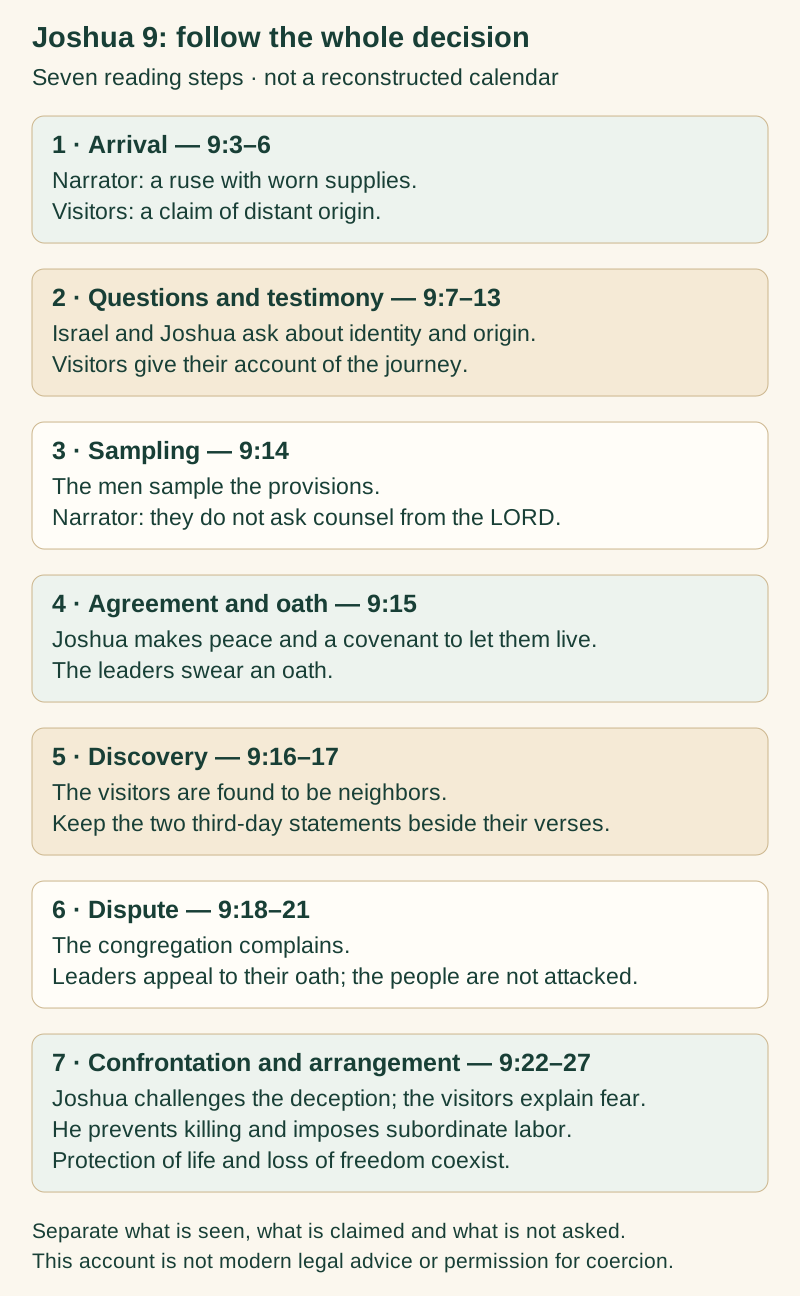
Seven steps, including the aftermath
| Step | Passage | What is actually narrated |
|---|---|---|
| 1. Arrival with a prepared appearance | 9:3–6 | Gibeon’s people use a ruse, take worn equipment and dry, moldy bread, and arrive at Gilgal claiming a distant origin. |
| 2. Questions and testimony | 9:7–13 | Israel asks whether they might be local; Joshua asks their identity and origin. They claim a very long journey and explain the worn provisions through that claim. |
| 3. Sampling without the stated inquiry | 9:14 | The men sample the provisions; the narrator says they do not ask counsel from the LORD. |
| 4. Agreement and oath | 9:15 | Joshua makes peace and a covenant allowing them to live; the leaders swear an oath. |
| 5. New information | 9:16–17 | Three days after the covenant, Israel hears that they are neighbors. The account then describes traveling to their cities and arriving on the third day. |
| 6. Dispute over the response | 9:18–21 | Israel does not attack because of the leaders’ oath. The congregation complains; the leaders defend letting the people live and assign woodcutting and water carrying. |
| 7. Confrontation and lasting arrangement | 9:22–27 | Joshua confronts the deception; the Gibeonites explain their fear. He prevents their killing but imposes subordinate labor for the congregation and the altar. |
Notice the two third-day statements in 9:16–17. The first is tied to the time after the covenant; the second describes arriving at the cities during the narrated journey. Record each beside its sentence. The exercise does not need an invented calendar date or an exact timetable for every conversation.
Sources: Joshua 9, Updated World English Bible, Protestant Edition · World English Bible copyright and public-domain notice · Berean Standard Bible v5.9: selected canonical records · Berean Bible terms
Reading guide · study guidance
Put the supplies and the story about them in different columns
| Seen or sampled | Heard from the visitors | Not asked, according to the narrator |
|---|---|---|
| Worn sacks, patched wineskins, worn sandals and clothing; dry, moldy bread are presented (9:4–5, 12–13). The men sample the provisions (9:14). | The visitors say they come from far away and that the journey wore out originally fresh supplies and new equipment (9:6, 9–13). | The men do not ask counsel from the LORD (9:14). |
| The appearance of the supplies can be noted. | The claimed origin and history of those supplies remain the visitors’ testimony. | The verse does not describe exactly how an inquiry would have been made or reproduce an answer they never sought. |
Israel does raise a relevant question: could these people live nearby (9:7)? Joshua also asks who they are and where they come from (9:8). So “nobody asked any questions” is a poor summary. The narrator identifies a particular missing inquiry, not the absence of all questioning.
Read 9:14 slowly. Sampling provisions is narrated action. Failure to ask the LORD is the narrator’s comment. The preceding claim that the bread had been hot when the travelers left home is character testimony (9:12). Moving these sentences into separate columns helps you avoid treating every statement as the same kind of evidence.
A useful distinction is between what an object looks like now and how someone says it became that way. That is our reading method. It does not make this guide a fraud-detection system or give us access to motives beyond those the chapter states.
Sources: Joshua 9, Updated World English Bible, Protestant Edition · World English Bible copyright and public-domain notice · Berean Standard Bible v5.9: selected canonical records · Berean Bible terms
Reading guide · study guidance
Follow the agreement into the discovery
A covenant here is a binding agreement, and an oath is a sworn promise. Joshua’s agreement lets the visitors live; the leaders swear to them (9:15). Soon afterward Israel hears that they are neighbors and travels to their cities (9:16–17). The text names Gibeon, Chephirah, Beeroth and Kiriath Jearim. The new information concerns their location, not merely a change in how old the bread looks.
The agreement does not disappear from the story when the deception is exposed. The congregation complains. The leaders insist that their oath prevents an attack and explain the consequence they fear if they violate it (9:18–20). Their reasoning needs to be heard as their reasoning, attached to the oath they have actually made.
Sources: Joshua 9, Updated World English Bible, Protestant Edition · World English Bible copyright and public-domain notice · Berean Standard Bible v5.9: selected canonical records · Berean Bible terms
Reading guide · study guidance
Hear the different responses
| Group or speaker | Response after discovery | Keep this limit visible |
|---|---|---|
| The congregation | Complains against the leaders (9:18). | The verse reports the complaint, not a transcript of every person’s view. |
| The leaders | Appeal to their oath by the LORD, say the people must live, and express fear of wrath for breaking the oath (9:19–21). | These are their stated reasons within the story, not a complete modern law of contracts. |
| Joshua | Challenges the deception, announces a curse involving continuing servitude, protects the Gibeonites from being killed and assigns labor (9:22–23, 26–27). | Preservation of life and loss of freedom coexist in the account. |
| The Gibeonites | Say they feared for their lives because of what they had been told about the command to Moses; place themselves in Joshua’s hands (9:24–25). | Their speech gives their explanation. It does not make the imposed labor a freely chosen volunteer role. |
It is tempting to finish a summary with “their lives were spared” and make the ending sound uncomplicated. But verse 23 uses the language of servitude and a curse, and verse 27 specifies labor. The account holds protection and subordination together. Calling this a welcoming volunteer opportunity would soften a material part of the text.
The chapter also does not give a detailed account of the laborers’ daily conditions or later experiences. Those fields belong in a “not supplied here” note, not in an invented testimony. This worksheet neither endorses slavery nor treats ancient conquest as permission for modern violence.
Sources: Joshua 9, Updated World English Bible, Protestant Edition · World English Bible copyright and public-domain notice · Berean Standard Bible v5.9: selected canonical records · Berean Bible terms
Reading guide · study guidance
Six observation-first questions
Answer first with a verse and a description. Then put any wider interpretation in a separate sentence. Choose supported, needs rereading or text not supplied to check the claim—not the reader’s character.
What does the narrator tell readers about the visitors before their long-journey claim is assessed?
Which questions show that Israel and Joshua do ask about the visitors’ identity or origin?
Does worn bread prove the claimed journey, or must its condition and the visitors’ explanation stay separate?
What inquiry does the narrator say was omitted, and what is not described about that inquiry?
What new information arrives after the covenant, and why do the leaders say the people must not be attacked?
At the chapter’s end, are the Gibeonites simply killed, released without obligations, or preserved under an imposed service arrangement? Give the verses and one limit on modern application.
Sources: Joshua 9, Updated World English Bible, Protestant Edition · World English Bible copyright and public-domain notice · Berean Standard Bible v5.9: selected canonical records · Berean Bible terms
Reading guide · study guidance
Explanatory answers
The narrator has already identified a ruse (9:3–5). Readers know the supplies and appearance are being used strategically before hearing the claim in 9:6. Do not give the visiting party’s explanation the same status as that framing.
9:7–8. Israel raises the possibility that they live nearby; Joshua asks who they are and where they come from. “They asked no questions at all” would contradict the passage.
Keep them separate (9:12–14). Dry, moldy bread is presented and provisions are sampled. The story that it began hot and became stale on a long journey is the visitors’ testimony, not independently verified travel history.
They do not ask counsel from the LORD (9:14). The verse identifies the missing inquiry. It gives no full procedure for making it and no transcript of an answer that was never requested.
They hear the visitors are neighbors (9:16). The leaders appeal to the oath they have sworn by the LORD and fear wrath for violating it (9:18–20). These reasons must be attributed to the leaders rather than converted into modern legal advice.
They are preserved under imposed service (9:23, 26–27). Joshua prevents their killing while assigning continuing woodcutting and water carrying. This is not equal freedom or modern volunteering; neither does the narrative authorize readers to enslave or punish people today.
Sources: Joshua 9, Updated World English Bible, Protestant Edition · World English Bible copyright and public-domain notice · Berean Standard Bible v5.9: selected canonical records · Berean Bible terms
Reading guide · study guidance
Reread one claim when new evidence arrives
Try this completed example before making your own card. Earlier claim: the visitors have come from a distant country (9:6, 9–13). Who supplies it: the visitors. New information: they are neighbors (9:16–17). What must be revised: the claimed origin cannot stand as an established fact. What remains in force within the story: the leaders appeal to the existing oath (9:18–20). What the text then narrates: protection from killing together with subordinate labor (9:23, 26–27).
Open the printable evidence and rereading worksheet. It includes all seven steps, the three-column evidence table, six explained answers, this completed rereading card and a reusable blank. You can finish one scene today and return at the discovery next time.
An open question grounded in the chapter is: “How does discovering deception change the leaders’ response while their oath still matters to them?” A broader question about whether a deceived agreement is valid today belongs to the relevant legal setting, not to a rule inferred from this ancient narrative. This guide gives no modern contract or fraud advice.
Sources: Joshua 9, Updated World English Bible, Protestant Edition · World English Bible copyright and public-domain notice · Berean Standard Bible v5.9: selected canonical records · Berean Bible terms
Reading guide · study guidance
Sources and next reading
Joshua 9, World English Bible, especially 9:3–15 for the presentation and covenant, and 9:16–27 for discovery and aftermath.
World English Bible rights: public-domain source; the diagram and exercises are original reading tools.
Bibleward reading plans and where to start reading the Bible for the next reading.
Study guidance · not Scripture. AI-assisted writing and automated content review; no individual pastoral endorsement is claimed. May God bless you with care for the people in the story and patience to distinguish a claim from its evidence.
Sources: Joshua 9, Updated World English Bible, Protestant Edition · World English Bible copyright and public-domain notice · Berean Standard Bible v5.9: selected canonical records · Berean Bible terms
Original printable reading resource
Keep the worksheet beside your reading
Open the worksheet from the article link to read or print it in your browser. Download the same self-contained HTML file below to keep an offline copy, including the exercises and answer guidance.
- Download the complete printable worksheet (HTML)
Original questions, reference tables and answer guidance. Print from your browser or save as PDF; no account or online submission is needed.
Sources: Joshua 9, Updated World English Bible, Protestant Edition · World English Bible copyright and public-domain notice · Berean Standard Bible v5.9: selected canonical records · Berean Bible terms
Sources and further reading
- Joshua 9, Updated World English Bible, Protestant Edition
Complete chapter 9; Scripture text, speaker order and verse numbering. Editorial footnotes or headings are not treated as original Scripture.
- World English Bible copyright and public-domain notice
Public-domain dedication and permission for all uses; trademark notice means original paraphrases are identified as study aids, not a revised WEB edition.
- Berean Standard Bible v5.9: selected canonical records
Supplemental check of selected exact canonical records listed in source-checks; WEB controls published numbering and terminology.
- Berean Bible terms
Public-domain dedication effective April 30, 2023.
Study guidance · not Scripture. AI-assisted writing and automated content review; no individual pastoral endorsement is claimed.