Reading guide · study guidance
Before you begin
James 2 begins with unequal treatment at a gathering and later describes someone lacking clothing and food. These two everyday cases help readers follow the chapter’s discussion of faith and action before isolating its best-known sentences. Start with what people do, what they say, and how James evaluates the gap between the two.
Read the whole chapter. The printable two-case worksheet includes a five-column comparison, the argument map, eight questions with explanations, and a neutral retelling. The summaries are original paraphrases checked against the Berean Standard Bible (BSB). This is a passage-reading guide, not a ruling on debates about justification or a test of anyone’s salvation.
Sources: James 2, Berean Standard Bible · Berean Bible Terms and Conditions
Reading guide · study guidance
Case one: who receives a place of honor?
James first tells his readers not to combine faith in Jesus Christ with favoritism (2:1). He then asks them to picture a gathering in which a finely dressed person with a gold ring receives attention, while a poorly dressed person is made to stand or sit in a low place (2:2–3).
Separate the visible behavior from an invented motive. The passage describes contrasting clothes, attention, and seating; it does not provide a private speech in which an usher explains a strategy. James evaluates the distinction as wrongful judging (2:4). His following questions and statements challenge the dishonoring of the poor and the favor shown to the rich in the situation he describes (2:5–7). They do not give the worksheet permission to classify a stranger’s whole character from clothing.
Verses 8–13 widen the discussion to neighbor-love, favoritism as wrongdoing, responsibility under the law, and speech and action shaped by mercy. Do not leap from the seating scene straight to verse 14 and lose that bridge.
Sources: James 2, Berean Standard Bible · Berean Bible Terms and Conditions
Reading guide · study guidance
Case two: warm words and an unmet need
In 2:14, James asks what good a claim to faith does without deeds and raises a question about such faith and salvation. He follows with a brother or sister lacking clothing and daily food. A person wishes them warmth and adequate food but supplies neither (2:15–16).
The problem in the example is not that the words sound unfriendly. It is that the physical need remains unmet. Verse 17 carries that illustration into James’s statement about faith without action being lifeless. Keep the actual need in view; the example is not a demand for the hungry person to earn food by displaying stronger faith.
Sources: James 2, Berean Standard Bible · Berean Bible Terms and Conditions
Reading guide · study guidance
Two cases in five columns
| Case and verses | Situation | Words or treatment | Action or omission | James’s stated evaluation or next step |
|---|---|---|---|---|
| Gathering · 2:1–13 | Richly and poorly dressed people enter | Attention and an honored seat for one; standing or a low place for the other | The gathering makes a distinction that dishonors the poor | Wrongful judging; discussion of neighbor-love, law, speech, action, and mercy |
| Material need · 2:14–17 | A brother or sister lacks clothing and daily food | Wishes for peace, warmth, and enough to eat | The necessary physical help is not provided | James asks what good that does and relates it to faith without action |
The headings are editorial. They help compare the cases without claiming they are identical. The first concerns unequal treatment; the second exposes speech that leaves a need unaddressed. Both require looking at the conduct being described instead of attaching labels to people completing this exercise.
Sources: James 2, Berean Standard Bible · Berean Bible Terms and Conditions
Reading guide · study guidance
Follow the argument beyond the second case
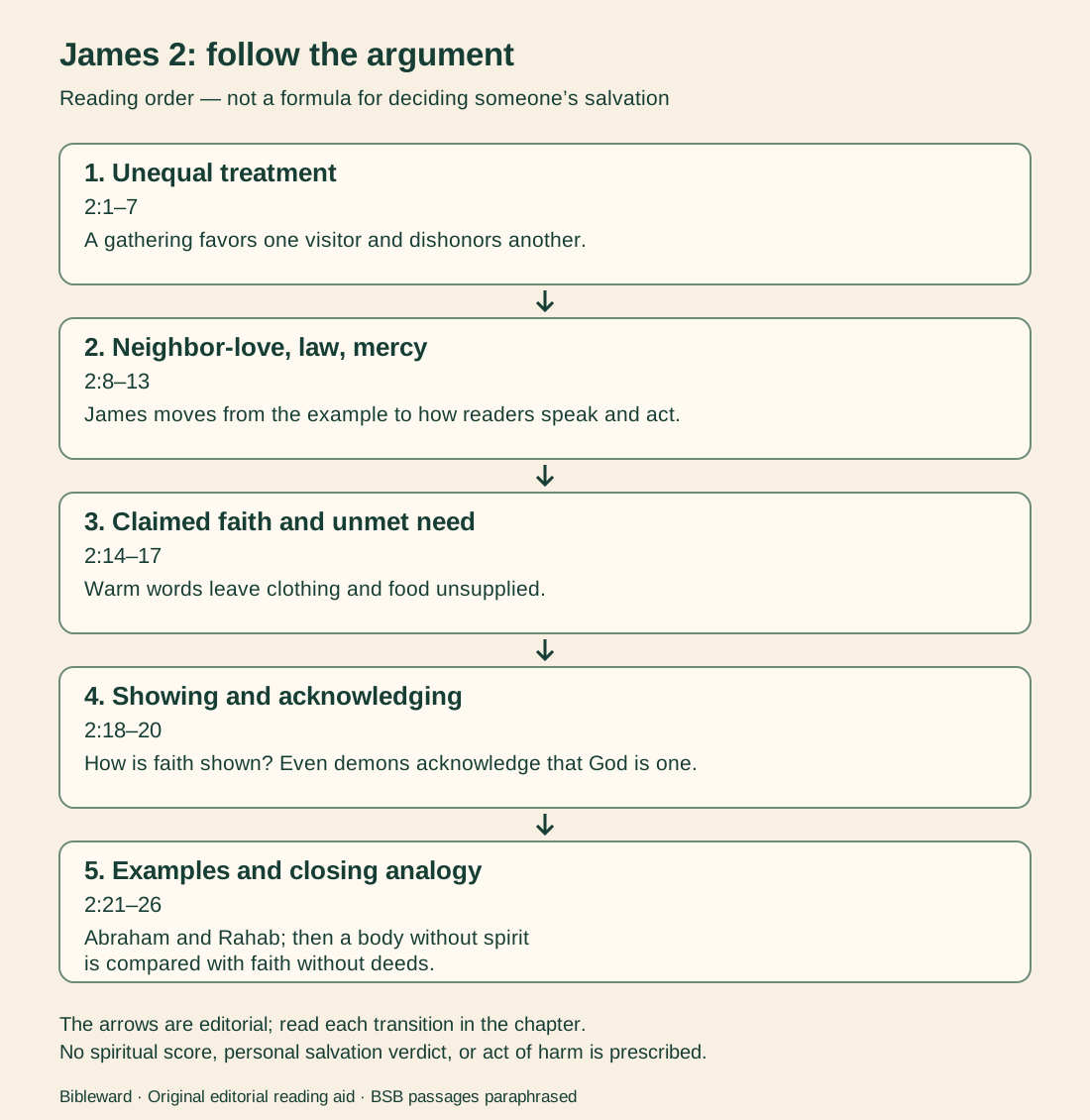
The argument map follows the chapter in this order:
2:1–7 — unequal treatment: the gathering example and James’s challenge to it.
2:8–13 — law and mercy: neighbor-love and favoritism lead into how readers should speak and act.
2:14–17 — unmet need: a claim to faith is tested against the case of clothing and food.
2:18–20 — showing and merely acknowledging: the argument asks how faith is shown through deeds; even demons acknowledge that God is one.
2:21–26 — further examples and conclusion: Abraham’s action involving Isaac and Rahab’s reception and redirection of the messengers lead into the body-and-spirit comparison.
Do not let the last step become an unexplained pair of names. James says Abraham’s faith works together with his action and is brought to completion through it (2:21–23). Verse 24 speaks of a person being justified through deeds rather than faith by itself. Rahab’s action is named in verse 25; the closing analogy again relates faith without deeds to a body without spirit (2:26).
Those are observations about James’s wording and sequence. A full account of justification—being counted righteous—and its relation to grace and faith requires more than this worksheet. This guide leaves comparisons among Christian traditions for a separately sourced discussion rather than silently presenting one tradition’s explanation as universal. Abraham’s example is not an instruction for a reader to endanger a child or imitate the narrated act.
Sources: James 2, Berean Standard Bible · Berean Bible Terms and Conditions
Reading guide · study guidance
A neutral retelling of the chapter
James warns his readers against favoring a wealthy-looking visitor over a poor one. He examines that conduct through neighbor-love, the law, and mercy. He then asks about a claim to faith that has no deeds, using the example of someone whose need for clothing and food receives words but no practical help. The argument continues with the challenge to show faith through deeds and the example of belief that even demons possess. Abraham and Rahab are then cited for actions connected with faith and justification. James closes with an analogy between a body without spirit and faith without deeds. This summary follows his argument; it does not decide a contemporary reader’s standing before God.
Sources: James 2, Berean Standard Bible · Berean Bible Terms and Conditions
Reading guide · study guidance
Complete one observation before an application
For a short session, fill only the action or omission column for one case. Next time, locate James’s evaluation and the paragraph that follows. A useful worked correction is to change “the poor person must prove faith before receiving help” to “the example challenges the speaker who supplies words without meeting the need.” The second statement follows 2:15–16; the first adds a condition absent from the scene.
The eight questions check passage reading, not spiritual rank. No answer needs to include personal giving, private hardship, or a real person’s name. Choose another passage in Plans, or return to the beginner starting guide.
Sources: James 2, Berean Standard Bible · Berean Bible Terms and Conditions
Reading guide · study guidance
Sources and scope
James 2 in the BSB: the biblical chapter, checked against the pinned BSB v5.9 corpus. Additional site commentary is not the controlling source for this worksheet.
USCCB James 2: optional separate edition. This guide follows the BSB chapter and does not adopt the publisher’s notes as a universal doctrinal explanation.
Berean permissions: public-domain Bible text. The case chart, diagram, retelling, and answers are original editorial work.
Blessing: May God bless you with patient attention, mercy toward your neighbor, and freedom to keep learning.
AI-assisted study guidance and automated review; no individual pastoral endorsement. The comparison and exercises are reading aids, not Scripture, a salvation verdict, or a spiritual score.
Sources: James 2, Berean Standard Bible · Berean Bible Terms and Conditions
Original printable reading resource
Keep the worksheet beside your reading
Open the worksheet from the article link to read or print it in your browser. Download the same self-contained HTML file below to keep an offline copy, including the exercises and answer guidance.
- Download the complete printable worksheet (HTML)
Original questions, reference tables and answer guidance. Print from your browser or save as PDF; no account or online submission is needed.
Sources: James 2, Berean Standard Bible · Berean Bible Terms and Conditions
Sources and further reading
- James 2, Berean Standard Bible
Full chapter, controlled by pinned BSB v5.9; no use of additional BibleHub commentary.
- Berean Bible Terms and Conditions
April 30, 2023 public-domain dedication; all uses freely permitted; derivatives and adaptations. Live page verified October 5, 2026.
Study guidance · not Scripture. AI-assisted writing and automated content review; no individual pastoral endorsement is claimed.