Reading guide · study guidance
Before you begin
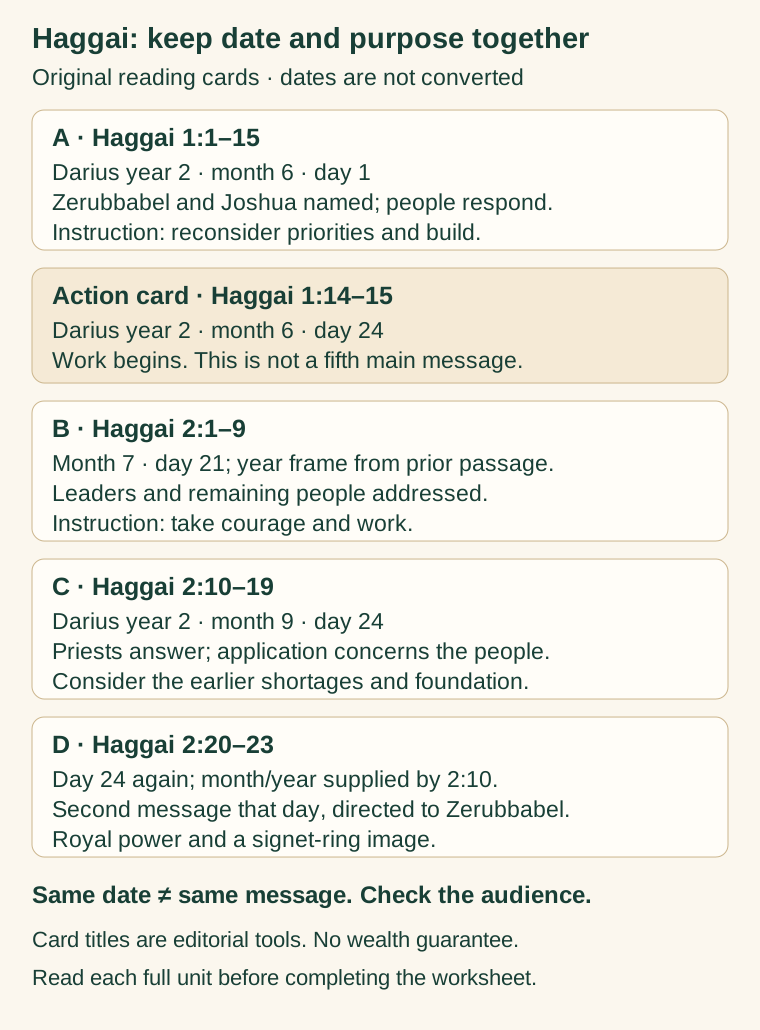
Haggai’s four main dated messages begin at 1:1, 2:1, 2:10 and 2:20. Record the date, the people addressed and what each message does. Keep 1:15 on a separate action card: it dates the beginning of work, rather than introducing a fifth main message. Two messages share the date in chapter 2, so a date alone cannot identify the unit.
Sources: Berean Standard Bible v5.9: canonical passage records · Berean Bible Terms and Conditions · Haggai1 · BSB · Haggai2 · NABRE
Reading guide · study guidance
Read the date and then keep reading
A notice at the beginning of a passage is a helpful doorway, but the room behind it matters too. Haggai names a governor, a high priest, priests answering questions, and the people. If your chart records only numbers, you will miss changes in audience and purpose.
The cards below use Berean Standard Bible (BSB) references and original paraphrases. “Message A” through “Message D” are our reading labels. They are not biblical titles or a claim that no shorter divine-speech introduction occurs inside these sections. For example, 1:3 introduces further speech within the first unit.
We retain the king’s regnal year, month and day where supplied. A regnal year means a year counted within a ruler’s reign. Some notices repeat the full date; others depend on the surrounding sequence. No modern calendar conversion is needed for this exercise.
Sources: Berean Standard Bible v5.9: canonical passage records · Berean Bible Terms and Conditions · Haggai1 · BSB · Haggai2 · NABRE
Reading guide · study guidance
Card A: reconsider and rebuild
Read Haggai 1:1–15. At 1:1, the date is day 1 of month 6 in Darius’s second year. The opening addresses Zerubbabel, Judah’s governor, and Joshua, the high priest. The message challenges the delay in rebuilding while the people attend to their own houses. In 1:8, the instruction includes obtaining timber and building.
The paragraph also supplies a narrated response. In 1:12, the leaders and the people obey; 1:14 describes them coming to begin work. That response belongs on the card beside the command. The account’s own explanation of drought in 1:9–11 concerns the people addressed here; it does not authorize us to diagnose the cause of a reader’s financial difficulty.
Separate action card — Haggai 1:14–15: work begins on day 24 of month 6, Darius’s second year. Notice the different day. A date attached to an action is not automatically a new sermon heading.
Sources: Berean Standard Bible v5.9: canonical passage records · Berean Bible Terms and Conditions · Haggai1 · BSB · Haggai2 · NABRE
Reading guide · study guidance
Card B: courage when the work looks small
Read Haggai 2:1–9. The new notice gives day 21 of month 7. The second-year frame comes from the preceding sequence, including 1:15; 2:1 itself does not repeat the king and year.
Zerubbabel, Joshua and the remaining people are addressed in 2:2. The question in 2:3 compares the house with its former glory. The instruction in 2:4 is to take courage and work, with an assurance of God’s presence. The rest of the unit speaks of divine action, glory and peace. It does not give a new report of the people’s construction progress, so leave that field “not narrated in this unit.”
Sources: Berean Standard Bible v5.9: canonical passage records · Berean Bible Terms and Conditions · Haggai1 · BSB · Haggai2 · NABRE
Reading guide · study guidance
Card C: questions for the priests, then a wider application
Read Haggai 2:10–19. This notice gives day 24 of month 9 in Darius’s second year. Haggai is instructed to ask the priests questions about holiness and defilement, meaning the ritual states being discussed. The priests’ answers in 2:12–13 are different: the first situation does not transfer holiness; the second does transmit defilement.
Haggai then applies the discussion to the people and their work in 2:14. The following verses ask them to consider the earlier shortages and the date associated with the temple foundation. The unit closes with a promise of blessing. The priests’ answers are narrated responses; a recovered harvest is not narrated in this passage. Keep a promise and a report of its outcome in separate boxes.
Sources: Berean Standard Bible v5.9: canonical passage records · Berean Bible Terms and Conditions · Haggai1 · BSB · Haggai2 · NABRE
Reading guide · study guidance
Card D: a second message on the same day
Read Haggai 2:20–23. Verse 20 marks another message on day 24. Month 9 and the second-year frame come from 2:10; the notice identifies this as a second message that day.
The instruction now is to tell Zerubbabel, governor of Judah. The message speaks of overturned royal power and presents him with a signet-ring image in 2:23. Record the image and its recipient before pursuing its wider interpretation. No response by Zerubbabel is narrated before the book ends. The card therefore leaves that response unfilled rather than inventing a speech or a completed political event.
Sources: Berean Standard Bible v5.9: canonical passage records · Berean Bible Terms and Conditions · Haggai1 · BSB · Haggai2 · NABRE
Reading guide · study guidance
Put the five cards beside one another
| Card | Date supplied in the text | Audience or action |
|---|---|---|
| A — 1:1–15 | Darius year 2; month 6, day 1 at 1:1 | Zerubbabel and Joshua named; people respond in 1:12–14. |
| Action — 1:14–15 | Darius year 2; month 6, day 24 | Leaders and people begin work. |
| B — 2:1–9 | Month 7, day 21; year frame from the preceding sequence | Zerubbabel, Joshua and the remaining people. |
| C — 2:10–19 | Darius year 2; month 9, day 24 | Priests answer; Haggai applies the ruling to the people. |
| D — 2:20–23 | Day 24 again; same-day frame from 2:10 | Message directed to Zerubbabel. |
Cards C and D show why the date is only one part of your reading card. Both share a day, but the new introduction and named audience distinguish the messages. Modern printed headings can help you spot that distinction; the date notices and speech instructions in the verses are the evidence.
Sources: Berean Standard Bible v5.9: canonical passage records · Berean Bible Terms and Conditions · Haggai1 · BSB · Haggai2 · NABRE
Reading guide · study guidance
Four readings, seven matching questions
Use one message card per session, keeping the action card beside A. On the first reading, complete date and audience. On the second, add the comparison and encouragement. On the third, follow the priests’ questions into the application. On the fourth, explain why the same date introduces a separate message.
Match each clue to A, B, C, D or the action card. A card may be used more than once.
Day 1 of month 6, Darius’s second year.
The leaders and people begin work on day 24 of month 6.
A question compares the house with its former glory.
Priests answer two questions about holiness and defilement.
A second message on day 24 directs attention to Zerubbabel.
The instruction includes bringing timber and building.
The unit speaks about shortages and the temple foundation before a promise of blessing.
Answer key: 1 — A (1:1); 2 — action card (1:14–15); 3 — B (2:2–4); 4 — C (2:11–13); 5 — D (2:20–21); 6 — A (1:8); 7 — C (2:15–19). A strong answer includes the reference and a brief reason, not just a letter. Questions 4 and 7 belong to the same unit because the priestly exchange leads into the wider application.
Sources: Berean Standard Bible v5.9: canonical passage records · Berean Bible Terms and Conditions · Haggai1 · BSB · Haggai2 · NABRE
Reading guide · study guidance
Use the cards without making a fundraising promise
Open the printable cards, matching exercise and answer key. The worksheet includes a blank card for another passage. Mark your notes “supported by the text,” “reread,” or “not specified.” These are reading checks, not measures of spiritual worth.
Haggai’s rebuilding instructions and promises address the people and circumstances named in the book. This worksheet offers no promise that a modern donation or building project will produce wealth. It also cannot establish that poverty is someone’s fault. A useful next step is smaller: reread one message and distinguish its instruction, promise and reported response.
Sources: Berean Standard Bible v5.9: canonical passage records · Berean Bible Terms and Conditions · Haggai1 · BSB · Haggai2 · NABRE
Reading guide · study guidance
Sources and next steps
Haggai 1, Berean Standard Bible — compare the message date with the work-start date. The parallel USCCB chapter offers another edition.
Haggai 2, USCCB NABRE — compare the three later message notices and their audiences. This guide’s reference and paraphrase checks use the complete BSB text.
Berean Bible terms — public-domain underlying text; the cards and explanations are original.
Where to start reading the Bible and Bibleward reading plans — continue at a manageable pace.
Study guidance, not Scripture. AI-assisted writing and automated content review. No pastoral endorsement is claimed. May God bless you with care for the words before you and wisdom for the questions you carry beyond them.
Sources: Berean Standard Bible v5.9: canonical passage records · Berean Bible Terms and Conditions · Haggai1 · BSB · Haggai2 · NABRE
Original printable reading resource
Keep the worksheet beside your reading
Open the worksheet from the article link to read or print it in your browser. Download the same self-contained HTML file below to keep an offline copy, including the exercises and answer guidance.
- Download the complete printable worksheet (HTML)
Original questions, reference tables and answer guidance. Print from your browser or save as PDF; no account or online submission is needed.
Sources: Berean Standard Bible v5.9: canonical passage records · Berean Bible Terms and Conditions · Haggai1 · BSB · Haggai2 · NABRE
Sources and further reading
- Berean Standard Bible v5.9: canonical passage records
HAG.1.1-15; HAG.2.1-23; exact local records and text checksums in accompanying source-checks evidence
- Berean Bible Terms and Conditions
Publisher public-domain dedication effective2023-04-30; live page checked in this review session
- Haggai1 · BSB
Canonical Bible text1:1–15 only; all appended automated commentary,word studies and unsourced history excluded.
- Haggai2 · NABRE
Live main page returned opening dated messages through2:14; later targeted read returned internal error. Full2:1–23 verified with pinned canonical BSB, not claimed fully live-read in NABRE.
Study guidance · not Scripture. AI-assisted writing and automated content review; no individual pastoral endorsement is claimed.