Reading guide · study guidance
Before you begin
Habakkuk moves through a complaint about injustice, a troubling answer, a further complaint, a wait for another answer, and a closing prayer. The first reply does not end the questions. Read the three chapters as a developing conversation, then distinguish the difficult conditions in 3:17 from the speaker’s response in 3:18–19.
Sources: Berean Standard Bible v5.9: canonical passage records · Berean Bible Terms and Conditions · Habakkuk1 · NABRE · Habakkuk2 · NABRE · Habakkuk3 · NABRE
Reading guide · study guidance
Begin with the question that is actually being asked
In Habakkuk 1:2–4, the prophet describes violence, conflict and distorted justice. His questions concern why help seems delayed and why wrongdoing continues. Those details matter: reducing the opening to a general instruction to be more positive would lose the complaint the book preserves.
The answer in 1:5–11 introduces the Chaldeans and describes their frightening advance. It is not a quiet promise that ordinary life will immediately improve. The text calls these conquerors guilty and associates them with reliance on their own strength in 1:11. Keep that description beside the next question rather than treating military success as moral approval.
Our summaries follow the Berean Standard Bible (BSB). The chapter links below allow comparison with the USCCB’s NABRE edition. No translation’s chapter heading should replace reading the actual change of speaker.
Sources: Berean Standard Bible v5.9: canonical passage records · Berean Bible Terms and Conditions · Habakkuk1 · NABRE · Habakkuk2 · NABRE · Habakkuk3 · NABRE
Reading guide · study guidance
Make four dialogue cards
These four cards give you the argument’s backbone. The eight-box map below separates a few of the transitions so you can see the entire book.
| Card | Passage | Main movement |
|---|---|---|
| 1. A complaint about justice | 1:2–4 | Habakkuk asks about unanswered cries, violence and justice being twisted. |
| 2. An unsettling reply | 1:5–11 | The LORD’s answer describes the rising Chaldeans, their conquest and their guilt. |
| 3. A further complaint | 1:12–17 | Habakkuk questions how the faithless can swallow up people more righteous than themselves; he pictures a conqueror catching people like fish. |
| 4. Watching and answering | 2:1–5 | Habakkuk takes his watch; the LORD answers about the vision’s appointed time and contrasts the proud with the righteous. |
The connection between cards 2 and 3 is crucial. Violence was already the problem. An answer involving violent conquerors raises another question about justice. You do not need to pretend the first answer settled everything in order to follow the text faithfully.
Sources: Berean Standard Bible v5.9: canonical passage records · Berean Bible Terms and Conditions · Habakkuk1 · NABRE · Habakkuk2 · NABRE · Habakkuk3 · NABRE
Reading guide · study guidance
Keep textual turns separate from your own questions
Use two colors if you have them: green, marked T, for something you can point to in the text; gold, marked Q, for your own unresolved question. The letters carry the distinction when printing without color.
A filled pair might be: T: “The invading people are described as guilty at 1:11, and Habakkuk asks about the faithless at 1:13.” Q: “How does this answer address the justice problem without removing it?” The first is an observation with locations. The second is a reading question, not another sentence we have added to Scripture.
This habit also prevents 2:3 from becoming a personal timetable. Its waiting language concerns the vision being discussed. It does not supply a deadline for your job, health, family or a modern political event.
Sources: Berean Standard Bible v5.9: canonical passage records · Berean Bible Terms and Conditions · Habakkuk1 · NABRE · Habakkuk2 · NABRE · Habakkuk3 · NABRE
Reading guide · study guidance
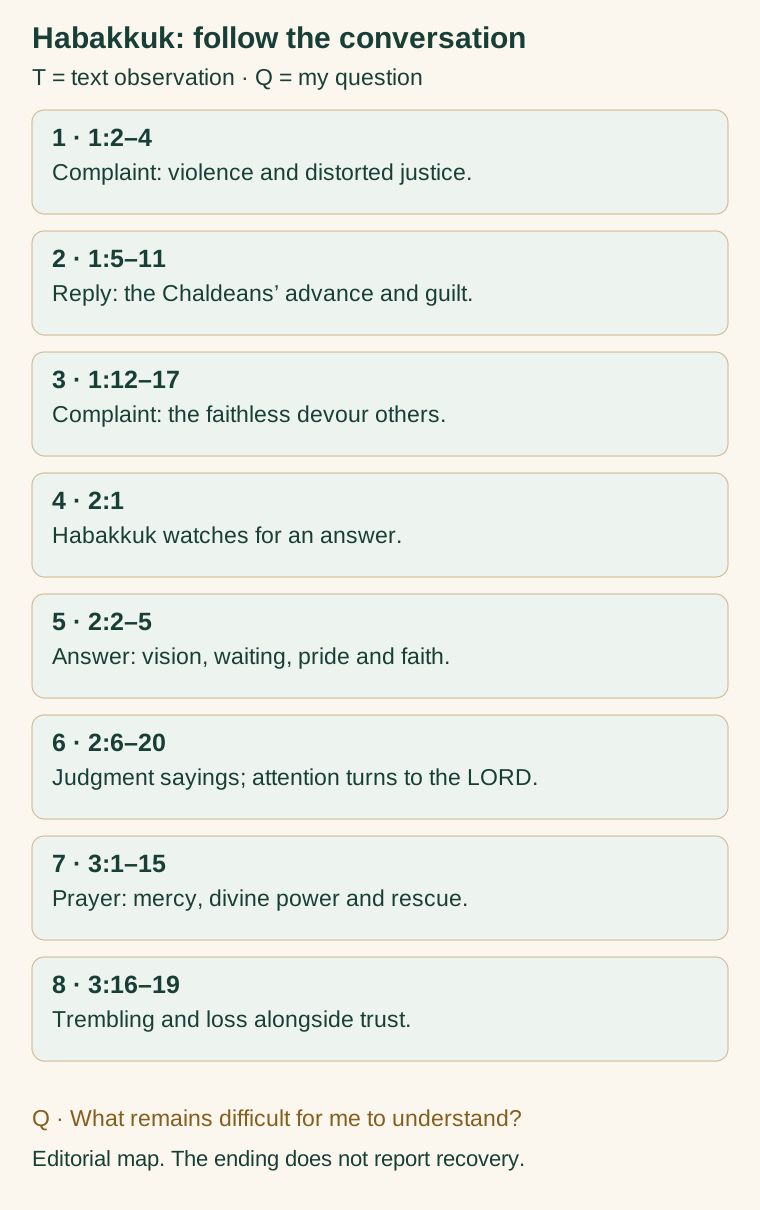
Follow the eight-box map
| Box | Read | What to notice |
|---|---|---|
| 1 | 1:2–4 | Complaint: violence and distorted justice. |
| 2 | 1:5–11 | Reply: the Chaldeans’ advance and guilt. |
| 3 | 1:12–17 | Complaint: the faithless devour others. |
| 4 | 2:1 | Habakkuk watches for an answer. |
| 5 | 2:2–5 | Answer: record the vision, wait, and notice the contrast in 2:4. |
| 6 | 2:6–20 | Judgment sayings against plunder, unjust gain, bloodshed, humiliation and idols; the final verse turns attention to the LORD. |
| 7 | 3:1–15 | Prayer: a plea for mercy and a poetic account of divine power and rescue. |
| 8 | 3:16–19 | Trembling, waiting, possible loss, and a declaration of trust. |
The box boundaries are editorial reading aids. Box 6 keeps the judgment sayings in the conversation: the book does not simply forget violence after introducing the conquerors. In box 7, read the powerful imagery as the prayer’s language; this exercise does not turn it into instructions for readers to use violence.
Sources: Berean Standard Bible v5.9: canonical passage records · Berean Bible Terms and Conditions · Habakkuk1 · NABRE · Habakkuk2 · NABRE · Habakkuk3 · NABRE
Reading guide · study guidance
Read the ending in two columns
Habakkuk 3:1 identifies what follows as a prayer. By 3:16, the speaker still describes trembling. Then 3:17 sets out the possibility of missing crops and livestock. The response in 3:18–19 expresses joy in God and dependence on God for strength.
| Conditions described | Speaker’s response |
|---|---|
| Fig, vine, olive and field fail to provide food; flocks and herds are absent (3:17). | The speaker declares joy in God and describes God as his strength (3:18–19). |
| Trembling and waiting remain part of the prayer (3:16). | The conclusion follows those reactions; it does not erase them. |
The ending does not report that the harvest has recovered. It also does not require a reader in distress to manufacture the same feelings on demand. Keep the description, the response and your own situation distinguishable.
Sources: Berean Standard Bible v5.9: canonical passage records · Berean Bible Terms and Conditions · Habakkuk1 · NABRE · Habakkuk2 · NABRE · Habakkuk3 · NABRE
Reading guide · study guidance
Three short reading sessions
Day 1 — read chapter 1. Look back: what makes the second complaint more specific than the first? Notice the conquerors in 1:6–11 and the question at 1:13. Keep open: what still troubles you about the reply?
Day 2 — read chapter 2. Look back: how do the judgment sayings speak to the violence described earlier? Start with 2:6–8. Keep open: what does waiting mean within this vision, and what would require more study before applying it elsewhere?
Day 3 — read chapter 3. Look back: which words describe the conditions, and which describe the response? Compare 3:16–19. Keep open: how can trembling and trust sit together in a prayer?
These are three sessions, not a streak. Repeat one or spread them out. If a difficult passage touches painful experience, you may keep your notes private, take a break, or read with someone you trust.
Sources: Berean Standard Bible v5.9: canonical passage records · Berean Bible Terms and Conditions · Habakkuk1 · NABRE · Habakkuk2 · NABRE · Habakkuk3 · NABRE
Reading guide · study guidance
Six locating questions and checks
| Question | Check after trying |
|---|---|
| 1. Where is justice named as a problem in the first complaint? | 1:4, within 1:2–4. The complaint concerns what happens to justice, not only the speaker’s mood. |
| 2. Which people are introduced in the first reply, and where is their guilt described? | The Chaldeans at 1:6; their guilt and reliance on strength at 1:11. Read the whole reply before judging its tone. |
| 3. Where does the next complaint question the treatment of people more righteous than their attackers? | 1:13, in the complaint beginning at 1:12. This responds to the problem raised by the first reply. |
| 4. Where are watching and the next answer joined? | Habakkuk watches in 2:1; the LORD answers in 2:2. The chapter break does not reset the discussion. |
| 5. Where does the text identify a prayer? | 3:1. This is a textual notice, not merely our map’s heading. |
| 6. Do 3:17–19 say the crops recovered before the speaker rejoiced? | No. Verse 17 presents loss; verses 18–19 state a response. Recovery is not reported here. |
Sources: Berean Standard Bible v5.9: canonical passage records · Berean Bible Terms and Conditions · Habakkuk1 · NABRE · Habakkuk2 · NABRE · Habakkuk3 · NABRE
Reading guide · study guidance
Take the map into your next reading
Open the printable map, three-session plan and answer worksheet. Keep one text observation and one unresolved question from each session. Mark your answers “supported by the text,” “reread,” or “not specified”; no score measures your faith.
Sources: Berean Standard Bible v5.9: canonical passage records · Berean Bible Terms and Conditions · Habakkuk1 · NABRE · Habakkuk2 · NABRE · Habakkuk3 · NABRE
Reading guide · study guidance
Sources and next steps
Habakkuk 1, USCCB, chapter 2, and chapter 3 — compare the complete conversation and prayer in NABRE.
Berean Bible and public-domain terms — BSB is the underlying text checked for every observation; no commentary text is copied.
Where to start reading the Bible and Bibleward reading plans — choose your next manageable reading.
Study guidance, not Scripture. AI-assisted writing and automated content review. No pastoral endorsement is claimed. May God bless you with room for honest questions and patient companions as you read.
Sources: Berean Standard Bible v5.9: canonical passage records · Berean Bible Terms and Conditions · Habakkuk1 · NABRE · Habakkuk2 · NABRE · Habakkuk3 · NABRE
Original printable reading resource
Keep the worksheet beside your reading
Open the worksheet from the article link to read or print it in your browser. Download the same self-contained HTML file below to keep an offline copy, including the exercises and answer guidance.
- Download the complete printable worksheet (HTML)
Original questions, reference tables and answer guidance. Print from your browser or save as PDF; no account or online submission is needed.
Sources: Berean Standard Bible v5.9: canonical passage records · Berean Bible Terms and Conditions · Habakkuk1 · NABRE · Habakkuk2 · NABRE · Habakkuk3 · NABRE
Sources and further reading
- Berean Standard Bible v5.9: canonical passage records
HAB.1.1-17; HAB.2.1-20; HAB.3.1-19; exact local records and text checksums in accompanying source-checks evidence
- Berean Bible Terms and Conditions
Publisher public-domain dedication effective2023-04-30; live page checked in this review session
- Habakkuk1 · NABRE
Full chapter: first complaint,reply and renewed complaint; Scripture only, not historical footnote datings.
- Habakkuk2 · NABRE
Full chapter: watch,answer,judgment sayings and closing temple notice. No denominational justification formula adopted.
- Habakkuk3 · NABRE
Full prayer and3:16–19 ending; canonical BSB controls article paraphrases.
Study guidance · not Scripture. AI-assisted writing and automated content review; no individual pastoral endorsement is claimed.