Reading guide · study guidance
Before you begin
Study guidance · not Scripture. AI-assisted writing and automated content review; no individual pastoral endorsement is claimed.
Sources: Updated World English Bible: Galatians 3 · Berean Standard Bible: Galatians 3 · World English Bible information and permissions · Berean Bible Terms and Conditions · Updated World English Bible: Genesis 15 · Updated World English Bible: Genesis 12 · Updated World English Bible: Deuteronomy 27 · Updated World English Bible: Habakkuk 2 · Updated World English Bible: Leviticus 18 · Updated World English Bible: Deuteronomy 21
Reading guide · study guidance
Start with five questions for the whole chapter
Open Galatians 3 and keep it beside the table. These five sections are an editorial reading aid; another Bible may put its paragraph breaks elsewhere. Keep the verse ranges even when headings differ.
Scripture observation: Paul begins with questions about the Galatians' experience of the Spirit, turns to Abraham and scriptural evidence, and ends with belonging to Christ and inheritance (3:1–29). The chapter's ending is therefore part of the same discussion as its middle.
| Question card | What this section asks | What to mark and how it connects |
|---|---|---|
| 1. 3:1–5 | How did the Galatians receive the Spirit, and how do they expect to continue? | Mark Paul's questions. They challenge a move from reliance on the Spirit toward a different basis for completion. Verse 6 introduces Abraham into that argument. |
| 2. 3:6–14 | How do Abraham, the nations, faith, and Christ's redemption belong together? | Mark quotations separately from Paul's explanations. The sequence moves from Abraham's faith and blessing to the law's curse, then to Christ and the blessing reaching Gentiles in 3:14. |
| 3. 3:15–18 | Can the later law cancel the earlier promise? | Mark the ordinary covenant analogy, Paul's identification of the promised offspring with Christ, and the 430-year comparison. The inheritance is attached to promise in 3:18. |
| 4. 3:19–25 | Why, then, was the law given, and is it opposed to God's promises? | Mark both questions and their answers. Paul speaks of transgressions, an interval until the offspring's arrival, confinement, and the law's temporary guardian role. |
| 5. 3:26–29 | How does the argument identify those who belong to Christ? | Mark faith, baptism into Christ, shared unity, and inheritance. Verse 29 returns to Abraham and promise rather than beginning an unrelated topic. |
Try one card at a time. In the margin, use Q for a question, S for a Scripture citation, and E for Paul's explanation. A sentence can contain more than one: verse 11 states an argument and supports it with a quotation. The labels help you read, rather than replacing the sentence.
Sources: Updated World English Bible: Galatians 3 · Berean Standard Bible: Galatians 3 · World English Bible information and permissions · Berean Bible Terms and Conditions · Updated World English Bible: Genesis 15 · Updated World English Bible: Genesis 12 · Updated World English Bible: Deuteronomy 27 · Updated World English Bible: Habakkuk 2 · Updated World English Bible: Leviticus 18 · Updated World English Bible: Deuteronomy 21
Reading guide · study guidance
Connect quotations to the claims around them
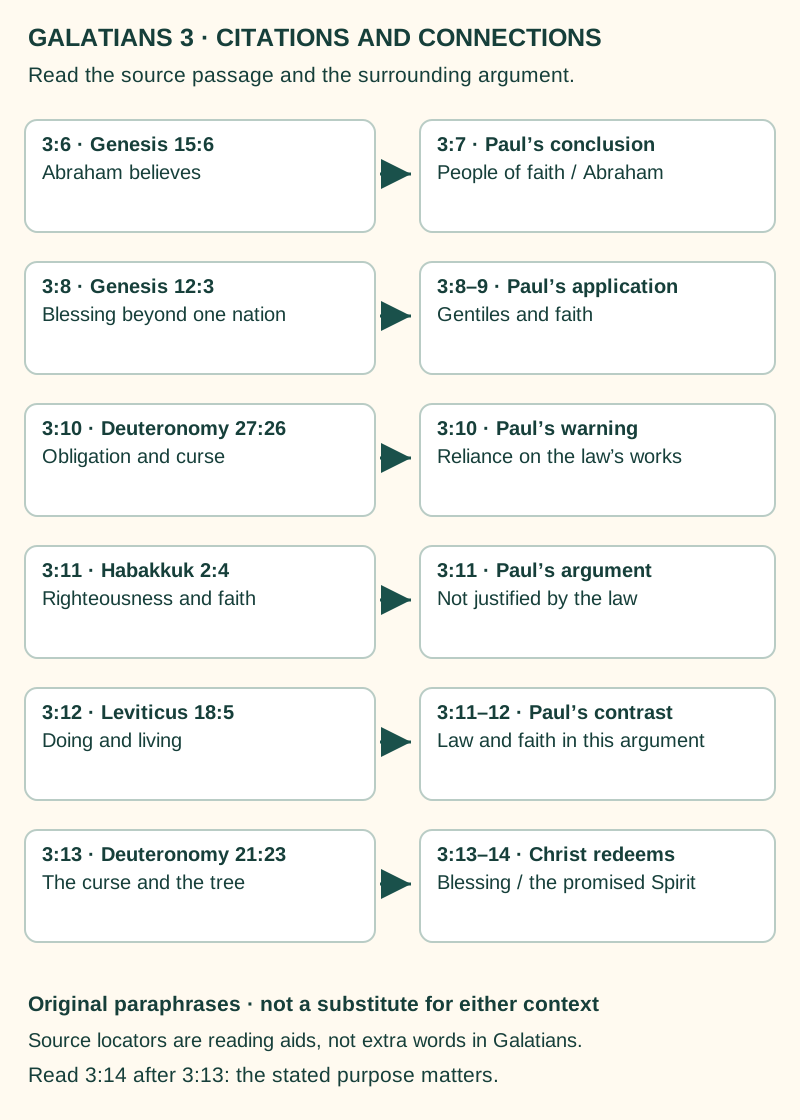
The citations in 3:6–14 do different jobs. Some introduce Abraham's faith and the blessing of the nations; others contribute to the contrast involving the law and to Paul's account of Christ's redemption. Read at least the sentence before and after each citation.
| Quotation at | Source to read alongside it | Connection in Paul's argument |
|---|---|---|
| 3:6 | Genesis 15:6 | Abraham's trust and its reckoning as righteousness lead into Paul's statement about people of faith in 3:7. |
| 3:8 | Genesis 12:3; compare the related Abraham promises identified in the WEB notes | The promise of blessing beyond one nation supports Paul's account of Gentiles and faith in 3:8–9. This is not a word-for-word identity claim about every English rendering. |
| 3:10 | Deuteronomy 27:26 | The obligation to carry out the law supports the warning about reliance on its works and the curse. Read the obligation as part of the argument, not as a curse to pronounce on someone. |
| 3:11 | Habakkuk 2:4 | Paul uses the relation of righteousness and faith in explaining why justification does not come by the law. |
| 3:12 | Leviticus 18:5 | The statement about doing the commands and living by them supplies the contrast he makes in this part of the argument. |
| 3:13 | Deuteronomy 21:23 | Paul connects the curse associated with hanging on a tree to Christ's redeeming action, then explains its purpose in 3:14. |
For example, the citation at 3:13 is not the paragraph's stopping point. Verse 14 explains a purpose: blessing reaching Gentiles through Christ and receiving the promised Spirit through faith. Leave that purpose in your summary.
Sources: Updated World English Bible: Galatians 3 · Berean Standard Bible: Galatians 3 · World English Bible information and permissions · Berean Bible Terms and Conditions · Updated World English Bible: Genesis 15 · Updated World English Bible: Genesis 12 · Updated World English Bible: Deuteronomy 27 · Updated World English Bible: Habakkuk 2 · Updated World English Bible: Leviticus 18 · Updated World English Bible: Deuteronomy 21
Reading guide · study guidance
Keep the citation map beside your Bible
Editorial reading method: These arrows show how the six citations function in this chapter. They summarize Paul's use of the passages; they do not replace reading those passages in their own settings.
Sources: Updated World English Bible: Galatians 3 · Berean Standard Bible: Galatians 3 · World English Bible information and permissions · Berean Bible Terms and Conditions · Updated World English Bible: Genesis 15 · Updated World English Bible: Genesis 12 · Updated World English Bible: Deuteronomy 27 · Updated World English Bible: Habakkuk 2 · Updated World English Bible: Leviticus 18 · Updated World English Bible: Deuteronomy 21
Reading guide · study guidance
Use the 430 years for the question Paul is answering
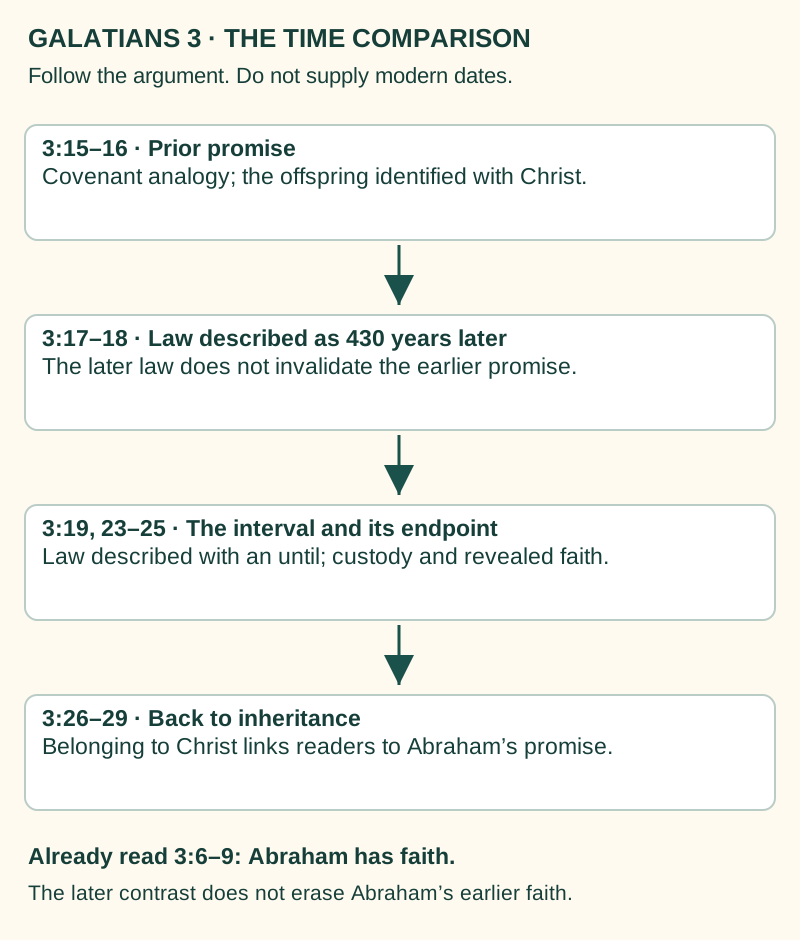
In 3:15 Paul introduces an ordinary human covenant comparison. Verse 16 identifies the promised offspring with Christ. Verses 17–18 then explain why the later law cannot undo the prior promise. The point of the sequence is the continuing force of the promise.
| Timeline check | Supported observation | What this does not settle |
|---|---|---|
| Earlier promise, 3:15–16 | Paul uses a confirmed covenant analogy and identifies the promised offspring with Christ. | A complete account of every Abraham promise across Genesis. |
| Later law, 3:17–18 | Paul places the law 430 years later and argues that it cannot revoke the promise. | A modern calendar date or a reconciliation of every chronological passage. |
| The interval and its endpoint, 3:19, 23–25 | The law is described with an until; Paul contrasts custody before the revealed faith with the situation after faith has come. | A claim that Abraham had no faith. Paul has already described Abraham's faith in 3:6–9. |
| Inheritance, 3:26–29 | Faith in Christ and belonging to Christ lead back to Abraham's offspring and the promised inheritance. | A formula for pronouncing an individual reader saved or unsaved. |
The language about faith coming in 3:23–25 needs its surrounding sentences. Paul has already spoken of Abraham's faith. So the later language cannot simply mean that no one had ever trusted God before. For this exercise, record the contrast Paul makes between the law's custody and the revealed faith, without forcing an entire historical reconstruction into the diagram.
Sources: Updated World English Bible: Galatians 3 · Berean Standard Bible: Galatians 3 · World English Bible information and permissions · Berean Bible Terms and Conditions · Updated World English Bible: Genesis 15 · Updated World English Bible: Genesis 12 · Updated World English Bible: Deuteronomy 27 · Updated World English Bible: Habakkuk 2 · Updated World English Bible: Leviticus 18 · Updated World English Bible: Deuteronomy 21
Reading guide · study guidance
Read the timeline without turning it into a calendar
430-year purpose check: Write the number beside 3:17, identify the earlier and later items, and complete this sentence in your own words: Paul uses the sequence to argue that ________. A supported answer is that the later law cannot cancel the earlier promise. A modern year for either event is outside what this worksheet establishes.
Sources: Updated World English Bible: Galatians 3 · Berean Standard Bible: Galatians 3 · World English Bible information and permissions · Berean Bible Terms and Conditions · Updated World English Bible: Genesis 15 · Updated World English Bible: Genesis 12 · Updated World English Bible: Deuteronomy 27 · Updated World English Bible: Habakkuk 2 · Updated World English Bible: Leviticus 18 · Updated World English Bible: Deuteronomy 21
Reading guide · study guidance
Try six sentence-connection questions
Connect 3:2 and 3:5. Which contrast appears in both, and why is verse 6 a meaningful next step?
Connect 3:6 and 3:7. Which is a Scripture quotation, and which gives Paul's conclusion about Abraham's children?
Connect 3:13 and 3:14. How does the statement about redemption lead to a purpose involving Gentiles and the Spirit?
Connect 3:17 and 3:18. What does the 430-year statement help establish about inheritance?
Connect 3:19 and 3:21. Does asking why the law was given mean Paul says it opposes God's promises?
Connect 3:26–28 and 3:29. How does the final sentence return to the earlier promise discussion?
Sources: Updated World English Bible: Galatians 3 · Berean Standard Bible: Galatians 3 · World English Bible information and permissions · Berean Bible Terms and Conditions · Updated World English Bible: Genesis 15 · Updated World English Bible: Genesis 12 · Updated World English Bible: Deuteronomy 27 · Updated World English Bible: Habakkuk 2 · Updated World English Bible: Leviticus 18 · Updated World English Bible: Deuteronomy 21
Reading guide · study guidance
Compare your answers with the explanation
Works of the law versus hearing with faith. Both questions concern receiving the Spirit or God's work among them. Abraham in 3:6 gives Paul a scriptural example of believing God; it is connected evidence, not a random historical detour.
Verse 6 cites Abraham's believing and its reckoning as righteousness; verse 7 states Paul's conclusion. The conclusion concerns people of faith as Abraham's children. Quotation and explanation work together but should be marked differently.
Verse 14 gives the intended result. Paul connects Christ's redemption in 3:13 with Abraham's blessing reaching Gentiles through Christ and the promised Spirit being received through faith. Stopping at the tree reference leaves that purpose unread.
The later law does not cancel the prior promise. The number in 3:17 places the law later in this comparison; 3:18 explains that inheritance rests on God's grant by promise. The number is not a stand-alone date calculator.
No. Verse 19 gives a role linked to transgressions and an endpoint connected to the promised offspring. Verse 21 explicitly rejects the claim that the law is against God's promises. Both answers belong on the card.
Belonging to Christ connects the readers to Abraham and inheritance by promise. The statements about faith, baptism, and unity lead into 3:29. This exercise observes that connection; it does not settle every later debate about baptism or church practice.
Sources: Updated World English Bible: Galatians 3 · Berean Standard Bible: Galatians 3 · World English Bible information and permissions · Berean Bible Terms and Conditions · Updated World English Bible: Genesis 15 · Updated World English Bible: Genesis 12 · Updated World English Bible: Deuteronomy 27 · Updated World English Bible: Habakkuk 2 · Updated World English Bible: Leviticus 18 · Updated World English Bible: Deuteronomy 21
Reading guide · study guidance
Correct two opposite shortcuts
| Misreading case | What it leaves out | Better summary |
|---|---|---|
| The law arrived later, so it replaced the promise as the basis for inheritance. | The negative claim in 3:17 and the explanation in 3:18. | Paul argues that the later law cannot cancel the prior promise. |
| The law does not supply the promised inheritance, so Paul says it had no purpose and was God's enemy. | The answer about its role in 3:19 and the denial of opposition in 3:21. | Paul distinguishes the law's role from the promise and denies that it opposes God's promises. |
Interpretive scope: This is a map of Paul's argument, not a full account of Christian teaching about law, justification, or baptism. Justification concerns how sinners are put right with God; this guide does not compare traditions' detailed accounts of that subject. Note a question for a commentary that identifies its tradition, especially at compressed statements such as 3:20, instead of treating this worksheet as a final ruling.
Sources: Updated World English Bible: Galatians 3 · Berean Standard Bible: Galatians 3 · World English Bible information and permissions · Berean Bible Terms and Conditions · Updated World English Bible: Genesis 15 · Updated World English Bible: Genesis 12 · Updated World English Bible: Deuteronomy 27 · Updated World English Bible: Habakkuk 2 · Updated World English Bible: Leviticus 18 · Updated World English Bible: Deuteronomy 21
Reading guide · study guidance
Keep a question you can support
| Reading-card field | Filled example | Blank card |
|---|---|---|
| Passage | Galatians 3:17–18 | Verses: ________ |
| Question being answered | Can the later law invalidate the earlier promise? | Question: ________ |
| Kind of sentence | Paul's explanation, following a covenant analogy. | Quotation, question, or explanation? ________ |
| Connection | Verse 18 explains why promise remains the basis of inheritance. | This sentence connects to ________ because ________. |
| Limit | The 430 years serve the comparison; this card supplies no modern date. | This passage does not settle ________. |
Use the complete printable worksheet to repeat the five cards and six exercises. A good stopping point is one connection you can explain from neighboring verses, plus one question you still need to study. You can review the general method for reading a New Testament letter, plan your next reading, or revisit where to start reading the Bible.
May God bless your reading with patience for the whole argument and humility about the questions still open.
Sources: Updated World English Bible: Galatians 3 · Berean Standard Bible: Galatians 3 · World English Bible information and permissions · Berean Bible Terms and Conditions · Updated World English Bible: Genesis 15 · Updated World English Bible: Genesis 12 · Updated World English Bible: Deuteronomy 27 · Updated World English Bible: Habakkuk 2 · Updated World English Bible: Leviticus 18 · Updated World English Bible: Deuteronomy 21
Reading guide · study guidance
Sources and translation notes
Read Galatians 3 in the Updated World English Bible and compare the Berean Standard Bible. Read the chapter itself before its editorial notes. The BSB calls the figure in 3:24 a guardian; the linked WEB calls it a tutor.
Follow the cited passages: Genesis 15, Genesis 12, Deuteronomy 27, Habakkuk 2, Leviticus 18, and Deuteronomy 21. Source references in a Bible's notes are editorial aids; they are not additional words spoken by Paul.
World English Bible permissions and Berean Bible permissions. All explanations, question cards, diagrams, and answers here are original paraphrases and study guidance.
Sources: Updated World English Bible: Galatians 3 · Berean Standard Bible: Galatians 3 · World English Bible information and permissions · Berean Bible Terms and Conditions · Updated World English Bible: Genesis 15 · Updated World English Bible: Genesis 12 · Updated World English Bible: Deuteronomy 27 · Updated World English Bible: Habakkuk 2 · Updated World English Bible: Leviticus 18 · Updated World English Bible: Deuteronomy 21
Original printable reading resource
Keep the worksheet beside your reading
Open the worksheet from the article link to read or print it in your browser. Download the same self-contained HTML file below to keep an offline copy, including the exercises and answer guidance.
- Download the complete printable worksheet (HTML)
Original questions, reference tables and answer guidance. Print from your browser or save as PDF; no account or online submission is needed.
Sources: Updated World English Bible: Galatians 3 · Berean Standard Bible: Galatians 3 · World English Bible information and permissions · Berean Bible Terms and Conditions · Updated World English Bible: Genesis 15 · Updated World English Bible: Genesis 12 · Updated World English Bible: Deuteronomy 27 · Updated World English Bible: Habakkuk 2 · Updated World English Bible: Leviticus 18 · Updated World English Bible: Deuteronomy 21
Sources and further reading
- Updated World English Bible: Galatians 3
Galatians 3 full chapter; primary biblical text, not footnote labels or secondary commentary
- Berean Standard Bible: Galatians 3
Primary BSB Scripture section only, corroborated against checksum-verified v5.9 corpus
- World English Bible information and permissions
About the World English Bible; public-domain text, free print/electronic publication and name-use limits
- Berean Bible Terms and Conditions
Public-domain dedication; all uses permitted; derivative naming guidance
- Updated World English Bible: Genesis 15
GEN.15.6 and immediate chapter context
- Updated World English Bible: Genesis 12
GEN.12.3 and immediate chapter context
- Updated World English Bible: Deuteronomy 27
DEU.27.26 and immediate chapter context
- Updated World English Bible: Habakkuk 2
HAB.2.4 and immediate chapter context
- Updated World English Bible: Leviticus 18
LEV.18.5 and immediate chapter context
- Updated World English Bible: Deuteronomy 21
DEU.21.23 and immediate chapter context
Study guidance · not Scripture. AI-assisted writing and automated content review; no individual pastoral endorsement is claimed.