Reading guide · study guidance
Before you begin
Read 1 Peter 2:1–12 in the World English Bible, then use the printable image-switch worksheet. The summaries below are original paraphrases. They are reading notes, not replacement Bible text.
Sources: World English Bible — 1 Peter 2
Reading guide · study guidance
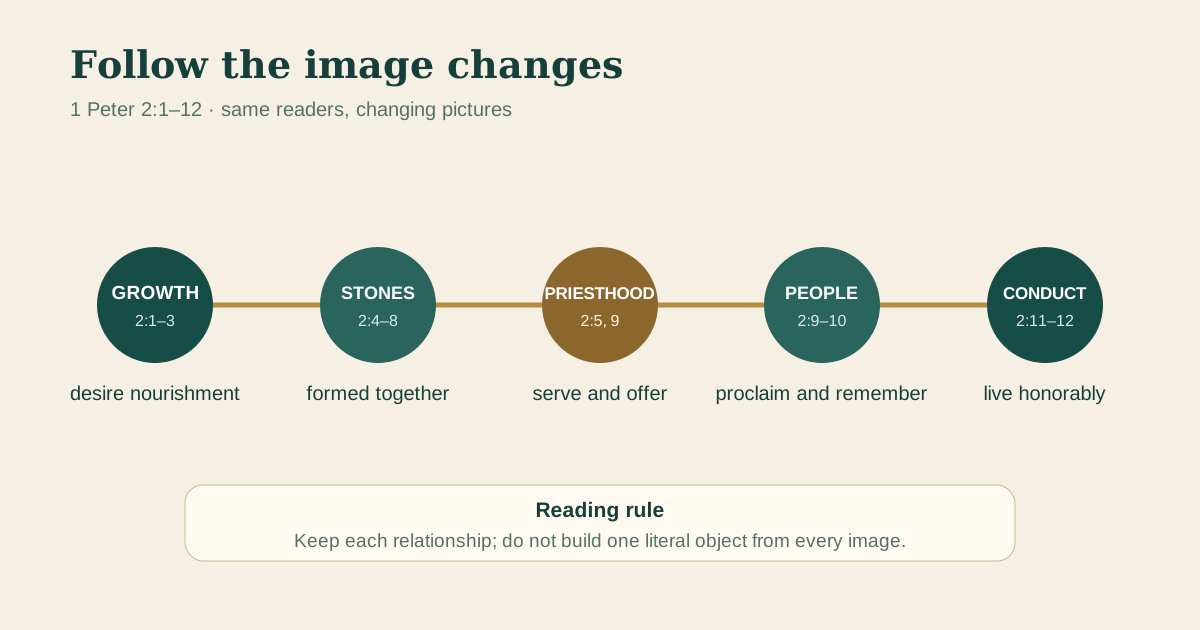
Five image stops in 1 Peter 2
| Stop | Verses | Image or identity language | Relationship the image highlights | Details the passage does not require |
|---|---|---|---|---|
| 1 | 2:1–3 | Newborn children longing for nourishing milk | The readers are to put away harmful conduct and desire what helps them grow | Their physical age, a feeding schedule, or literal milk |
| 2 | 2:4–5 | Jesus as a living stone; the readers as living stones forming a spiritual house | They come to him and are being formed together, rather than standing as unrelated stones | A floor plan, building material, or the number and position of each stone |
| 3 | 2:5, 9 | Holy and royal priesthood | The same readers are described as serving God and offering spiritual sacrifices through Jesus Christ | A claim that every detail of Israel’s temple service is transferred into this paragraph |
| 4 | 2:9–10 | Chosen race, holy nation and God’s own people | Corporate identity is joined to a purpose: declaring the excellence of the one who called them, and remembering received mercy | Ethnic superiority, a modern state boundary, or a ranking above other people |
| 5 | 2:11–12 | Beloved foreigners and pilgrims living among the nations | Their identity leads into restraint and visible good conduct before neighbors | A command to withdraw from every society or a promise that observers will always respond well now |
These are five reading stops, not five separate audiences. The second-person plural continues to address a group. The changing pictures emphasize appetite, belonging, service, shared identity and conduct in turn.
Sources: World English Bible — 1 Peter 2
Reading guide · study guidance
Keep the cornerstone and the stones distinct
Verses 4–8 do not make Jesus and the readers the same grammatical object. The readers come to him, the living stone rejected by people and chosen by God. They are then described also as living stones. The passage’s citations focus on the placed cornerstone, the rejected stone and the stone over which some stumble. The readers are described as being built into a house in relation to him.
That distinction prevents two opposite mistakes. A reader should not erase the shared living-stones description, but should not turn it into a claim that every stone is the cornerstone either. Similar imagery can express relationship without making every participant identical.
The WEB source page identifies the citations connected with 2:6–8 as Isaiah 28:16, Psalm 118:22 and Isaiah 8:14. Those cross-reference labels help locate earlier passages. They do not make every feature of each earlier setting part of Peter’s immediate image.
Sources: World English Bible — 1 Peter 2
Reading guide · study guidance
What the images support—and what they leave open
Supported by the passage: the readers approach Jesus; they are being formed together; priesthood language is tied to spiritual service; people-language is tied to proclamation and mercy; the identity section moves toward conduct among others.
Editorial inference: the five-stop arrangement on this page. It is a study aid based on shifts in 2:1–12. Peter does not number five stages.
Not stated here: a literal architectural design, a hierarchy assigning some readers better stone positions, or a modern ethnic ranking. The passage gives no basis for using its corporate images to demean outsiders.
Sources: World English Bible — 1 Peter 2
Reading guide · study guidance
How identity connects to action
The purpose clause in 2:9 connects identity with declaring God’s excellence. Verse 10 places the readers’ present identity beside their former lack of that identity and their receipt of mercy. Verses 11–12 then address them as beloved temporary residents and urge restraint and honorable behavior among the nations.
This order matters. The passage does not end at a title people can display. Nor does it tell readers to earn a place in the house by achieving a worksheet score. It moves from what God has done and whom they approach to a public way of life.
Sources: World English Bible — 1 Peter 2
Reading guide · study guidance
Eight statements to sort
Try these before opening the worksheet answers.
Jesus is the living stone whom the readers approach.
Every reader is individually called the cornerstone.
The readers are described together as a spiritual house.
The house image supplies a literal plan for church architecture.
Priesthood and people language address the same reader group in this paragraph.
The holy-nation description authorizes one modern ethnicity to rank itself above all others.
The paragraph connects shared identity with proclamation and good conduct.
The exact relationship between every earlier citation and every later Christian practice requires evidence beyond this short exercise.
Use three labels: supported by the passage, literal overreach, or needs another source. The explained key shows why an answer belongs in a category; it does not score anyone’s faith.
Sources: World English Bible — 1 Peter 2
Reading guide · study guidance
A short reading route
On the first pass, circle every plural reference to the readers. On the second, underline what Jesus or God does. On the third, draw an arrow only where the passage itself links identity to purpose or conduct. If an arrow depends on a guess, label it as inference.
The worksheet includes five relationship cards, all eight statements and a full answer key. When you finish, choose another reading in Plans or review where to start reading the Bible.
Sources: World English Bible — 1 Peter 2
Reading guide · study guidance
Sources and scope
World English Bible, 1 Peter 2 — primary text used to verify sequence, speakers, plural address, citations and image changes. The source identifies the updated WEB Protestant edition as public domain.
The five-stop map and categories are Bibleward editorial tools. They do not claim a complete theology of church, priesthood or Israel, and they do not settle tradition-specific questions about ordained ministry.
AI-assisted original reading resource. It is not Scripture, a spiritual ranking, or individual pastoral endorsement.
Sources: World English Bible — 1 Peter 2
Original printable reading resource
Keep the worksheet beside your reading
Open the worksheet from the article link to read or print it in your browser. Download the same self-contained HTML file below to keep an offline copy, including the exercises and answer guidance.
- Download the complete printable worksheet (HTML)
Original questions, reference tables and answer guidance. Print from your browser or save as PDF; no account or online submission is needed.
Sources: World English Bible — 1 Peter 2
Reading aid boundaries
How to use this reading aid
AI-assisted study guidance and automated review; no individual pastoral endorsement.
The five-stop map is an editorial reading aid, not a sequence numbered by 1 Peter.
Images describe relationships and purposes; they do not authorize ethnic superiority or a literal building plan.
Sources: World English Bible — 1 Peter 2
Sources and further reading
- World English Bible — 1 Peter 2
Full linked chapter page; verse text, sequence, editorial headings/footnotes and public-domain notice checked in this session.
Study guidance · not Scripture. AI-assisted writing and automated content review; no individual pastoral endorsement is claimed.