Reading guide · study guidance
Use the ten plagues as a reading index
Begin with Exodus 7:14–25. For each later episode, record an actual offer, request or reaction only if the passage supplies it. An empty “offer” field can be an accurate observation.
This guide follows the chapter and verse numbering of the linked World English Bible. Its name for the third plague is lice; some English versions use gnats. Keep your translation’s wording visible. All table descriptions are original paraphrases rather than quotations.
The opening serpent sign in 7:8–13 comes before the first plague row. Keeping that boundary clear helps you follow the ten-plague sequence without accidentally counting every sign as a separate plague.
Sources: Exodus 7, Updated World English Bible, Protestant Edition · Exodus 8, Updated World English Bible, Protestant Edition · Exodus 9, Updated World English Bible, Protestant Edition · Exodus 10, Updated World English Bible, Protestant Edition · Exodus 11, Updated World English Bible, Protestant Edition · Exodus 12, Updated World English Bible, Protestant Edition · World English Bible copyright and public-domain notice · Berean Standard Bible v5.9: selected canonical records · Berean Bible terms
Reading guide · study guidance
Ten episodes, without a forced pattern
| Plague and passage | What this episode records | What follows in the passage |
|---|---|---|
| 1. Water becomes blood · 7:14–25 | Demand for release; no departure concession from Pharaoh is narrated here. | His heart is described as hardened; he does not listen and turns away (7:22–23). |
| 2. Frogs · 8:1–15 | Pharaoh requests prayer for removal and promises to let the people sacrifice (8:8). | Moses prays; relief comes; Pharaoh hardens his heart and does not listen (8:12–15). |
| 3. Lice · 8:16–19 | The magicians cannot reproduce the sign and address Pharaoh. No release bargain is narrated here. | Pharaoh’s heart is described as hardened; he does not listen (8:19). |
| 4. Flies · 8:20–32 | Pharaoh first allows sacrifice within the land, then allows the wilderness with a distance limit (8:25–28). | Moses prays; the flies are removed; Pharaoh hardens his heart and refuses release (8:29–32). |
| 5. Livestock disease · 9:1–7 | Pharaoh investigates the survival of Israel’s livestock. No departure concession is narrated here. | His heart is described as stubborn; he does not release the people (9:7). |
| 6. Boils · 9:8–12 | The magicians cannot stand before Moses. No release bargain is narrated here. | The LORD hardens Pharaoh’s heart; he does not listen (9:12). |
| 7. Hail · 9:13–35 | Pharaoh admits wrongdoing, requests prayer and promises release (9:27–28). | After the storm stops, Pharaoh and his servants harden their hearts; release is refused (9:33–35). |
| 8. Locusts · 10:1–20 | Before the plague, Pharaoh limits departure to men. After it arrives, he asks forgiveness and removal (10:8–11, 16–17). | Moses prays; the locusts are removed; the LORD hardens Pharaoh’s heart and release is refused (10:18–20). |
| 9. Darkness · 10:21–29 | Pharaoh now permits children but requires the flocks and herds to stay (10:24). | Moses insists the livestock must go; the LORD hardens Pharaoh’s heart and he refuses (10:25–27). |
| 10. Death of the firstborn · announced in 11:1–10; occurs in 12:29–32 | After the deaths, Pharaoh tells Moses, Aaron and Israel to leave, taking their flocks and herds (12:31–32). | The departure is narrated in 12:37–38, with children and livestock. No later reversal is narrated within chapter 12. |
The table is a reading index, not a full summary of every detail. In particular, the final row sits within the Passover instructions and the account of great loss in chapter 12. Read the whole chapter; the deaths must not become a casual punch line in a chart about bargaining.
Sources: Exodus 7, Updated World English Bible, Protestant Edition · Exodus 8, Updated World English Bible, Protestant Edition · Exodus 9, Updated World English Bible, Protestant Edition · Exodus 10, Updated World English Bible, Protestant Edition · Exodus 11, Updated World English Bible, Protestant Edition · Exodus 12, Updated World English Bible, Protestant Edition · World English Bible copyright and public-domain notice · Berean Standard Bible v5.9: selected canonical records · Berean Bible terms
Reading guide · study guidance
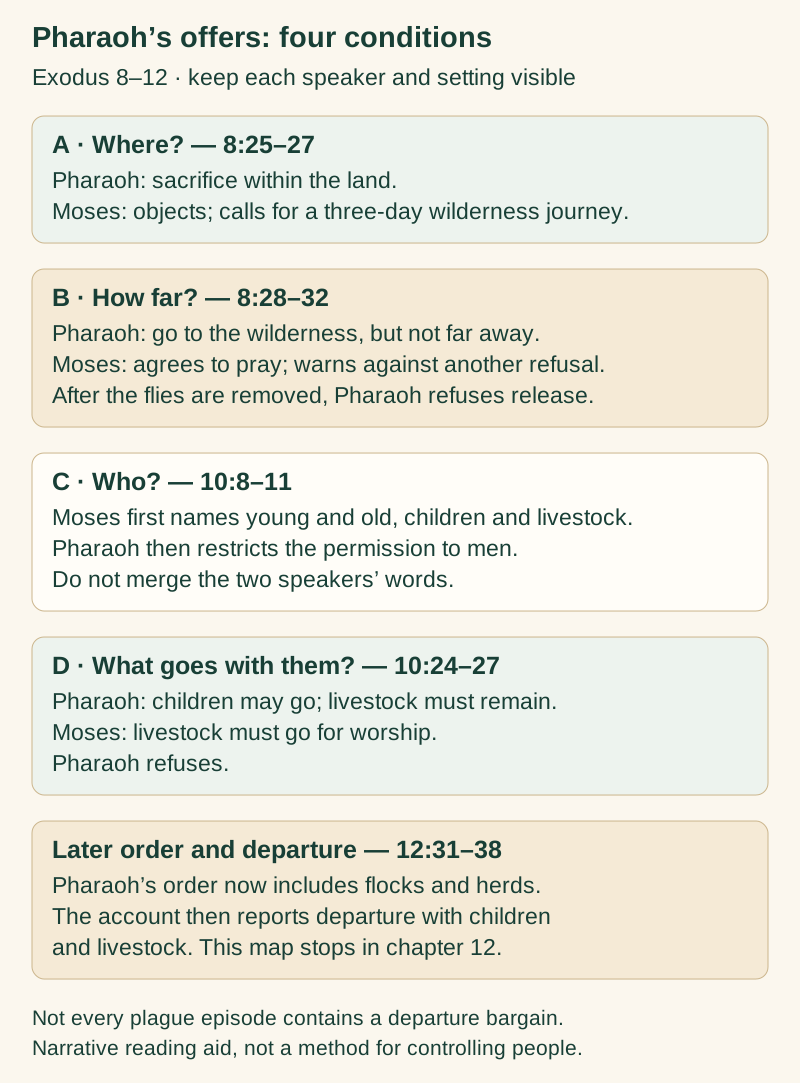
Four conditions that change
| Condition card | Pharaoh’s offer | Moses’ stated response | Later check |
|---|---|---|---|
| A. Where? · 8:25–27 | Sacrifice within the land. | Objects that the sacrifice would provoke the Egyptians; proposes a three-day journey into the wilderness. | This first location offer does not equal departure from Egypt. |
| B. How far? · 8:28–32 | The wilderness is allowed, but not a long distance away; he requests prayer. | Agrees to pray and warns against another deceptive refusal. | The flies disappear; Pharaoh still refuses release. |
| C. Who? · 10:8–11 | After asking who will go, Pharaoh permits men only. | Before that restriction, Moses has named young and old, sons and daughters, flocks and herds. | The men-only offer does not match Moses’ requested group. |
| D. What goes with them? · 10:24–27 | Children may go too, but flocks and herds must remain. | Insists that livestock must go because the animals needed for worship will only be known there. | Pharaoh refuses; at 12:31–32 his departure order finally includes the livestock. |
Card C needs especially careful ordering. Moses names the whole group at 10:9; Pharaoh then narrows the permission at 10:11. A summary that joins both speeches into one sentence could mistakenly make Moses the person excluding the children.
The darkness episode changes one restriction while keeping another. Pharaoh includes the children but excludes the animals. Moses’ reply gives a reason tied to worship (10:25–26), not a demand for a modern reader to copy this exchange in a disagreement.
Sources: Exodus 7, Updated World English Bible, Protestant Edition · Exodus 8, Updated World English Bible, Protestant Edition · Exodus 9, Updated World English Bible, Protestant Edition · Exodus 10, Updated World English Bible, Protestant Edition · Exodus 11, Updated World English Bible, Protestant Edition · Exodus 12, Updated World English Bible, Protestant Edition · World English Bible copyright and public-domain notice · Berean Standard Bible v5.9: selected canonical records · Berean Bible terms
Reading guide · study guidance
Separate a promise, relief and a refusal
Follow the flies through 8:28–32 as a worked example. First comes Pharaoh’s limited promise and request for prayer. Moses responds and prays. The flies are removed. Then Pharaoh refuses release. If you stop the summary at the prayer, you have not reached the episode’s outcome.
Now compare the locusts. The men-only offer occurs before the locusts arrive (10:8–14). Afterward Pharaoh asks for forgiveness and removal (10:16–17). The passage reports Moses’ prayer and the removal, followed by another refusal (10:18–20). Do not add a new, unrestricted release promise to that later request if the paragraph does not state one.
Sources: Exodus 7, Updated World English Bible, Protestant Edition · Exodus 8, Updated World English Bible, Protestant Edition · Exodus 9, Updated World English Bible, Protestant Edition · Exodus 10, Updated World English Bible, Protestant Edition · Exodus 11, Updated World English Bible, Protestant Edition · Exodus 12, Updated World English Bible, Protestant Edition · World English Bible copyright and public-domain notice · Berean Standard Bible v5.9: selected canonical records · Berean Bible terms
Reading guide · study guidance
Notice who is named in hardening statements
Hardening language concerns Pharaoh’s resistance in the narrative. Start by marking the wording and its subject; this exercise does not settle every Christian account of divine action and human responsibility.
| Wording to track | Example passages | What to record |
|---|---|---|
| Pharaoh’s heart is described as hardened or stubborn | 7:22; 8:19; 9:7, 35 | Record the state described without adding an agent that this particular clause does not name. |
| Pharaoh is said to harden his heart | 8:15, 32; 9:34 | Retain Pharaoh as the named actor; 9:34 also includes his servants. |
| The LORD is said to harden Pharaoh’s heart | 9:12; 10:20, 27 | Retain the named divine actor rather than silently replacing the subject. |
| The LORD speaks of hardening | 7:3; 10:1 | Mark these as divine speech: 7:3 announces it, while 10:1 speaks of what has been done and includes the servants. |
This is a selection of examples, not a complete list of every hardening statement. In 11:10 the summary again names the LORD. A careful first reading retains both the different subjects and their settings. A fuller interpretation needs broader context and an identified commentary; the chart alone cannot decide between theological traditions.
Sources: Exodus 7, Updated World English Bible, Protestant Edition · Exodus 8, Updated World English Bible, Protestant Edition · Exodus 9, Updated World English Bible, Protestant Edition · Exodus 10, Updated World English Bible, Protestant Edition · Exodus 11, Updated World English Bible, Protestant Edition · Exodus 12, Updated World English Bible, Protestant Edition · World English Bible copyright and public-domain notice · Berean Standard Bible v5.9: selected canonical records · Berean Bible terms
Reading guide · study guidance
Try two tracing tasks
Task 1 — retell the offers by speaker. Write four sentences beginning “Pharaoh offers…” and four beginning “Moses responds…”. Use cards A–D. Keep “Moses has already stated…” for card C so the order remains accurate.
Worked result: Pharaoh moves from worship within Egypt, to a limited wilderness journey, to men only, to children included but livestock retained. Moses objects to worship within Egypt, insists on the requested wilderness journey, names the whole company and insists on livestock. Each item has its own setting; this is not one uninterrupted conversation (8:25–29; 10:8–11, 24–26).
Task 2 — find an offer from a condition. If a note says “children allowed; animals retained,” locate the passage before naming the plague. Then find the later order that includes the animals.
Worked result: The first note belongs to darkness at 10:24. The later order is 12:31–32, after the death of the firstborn. The text between those locations matters; do not treat the offers as interchangeable.
Sources: Exodus 7, Updated World English Bible, Protestant Edition · Exodus 8, Updated World English Bible, Protestant Edition · Exodus 9, Updated World English Bible, Protestant Edition · Exodus 10, Updated World English Bible, Protestant Edition · Exodus 11, Updated World English Bible, Protestant Edition · Exodus 12, Updated World English Bible, Protestant Edition · World English Bible copyright and public-domain notice · Berean Standard Bible v5.9: selected canonical records · Berean Bible terms
Reading guide · study guidance
Eight retrieval questions
After the frogs, which verses distinguish Pharaoh’s promise, Moses’ prayer and the later refusal?
Where does Pharaoh offer sacrifice within Egypt, and what does Moses propose instead?
Which offer limits distance, and does removal of the flies result in release?
Before the locusts, whom does Moses name and whom does Pharaoh permit?
During darkness, what changes for children, and what restriction remains?
Which verse after the boils names the LORD as the actor in hardening, and which verse after the frogs names Pharaoh?
Do the blood, lice and boils passages each contain a departure bargain? Mark only what their verses narrate.
Where does Pharaoh’s final order in this reading include livestock, and where is departure actually reported?
Sources: Exodus 7, Updated World English Bible, Protestant Edition · Exodus 8, Updated World English Bible, Protestant Edition · Exodus 9, Updated World English Bible, Protestant Edition · Exodus 10, Updated World English Bible, Protestant Edition · Exodus 11, Updated World English Bible, Protestant Edition · Exodus 12, Updated World English Bible, Protestant Edition · World English Bible copyright and public-domain notice · Berean Standard Bible v5.9: selected canonical records · Berean Bible terms
Reading guide · study guidance
Answers and their limits
8:8; 8:12–13; 8:15. Pharaoh promises release, Moses prays and the frogs die, then Pharaoh hardens his heart when he sees relief. These are three separate observations.
8:25–27. Pharaoh offers sacrifice within the land. Moses objects to the danger of doing so before the Egyptians and states a three-day wilderness journey.
8:28, then 8:31–32. Pharaoh permits the wilderness but restricts distance. The flies are removed; the people are still not released. Relief and fulfilled permission are not the same event.
10:9–11. Moses names young and old, sons and daughters, flocks and herds. Pharaoh restricts the offer to men. Keep the two speakers in separate columns.
10:24–26. Pharaoh now permits the children too but retains the flocks and herds. Moses says the livestock must accompany them for worship. This is not the same offer as 10:11.
9:12 and 8:15. The former names the LORD; the latter names Pharaoh. Record the different subjects before attempting a broader theological explanation.
No departure bargain is narrated in 7:14–25, 8:16–19 or 9:8–12. There are demands, actions and reactions, but the table must not invent a release offer to fill each row.
12:31–32 and 12:37–38. Pharaoh orders departure with flocks and herds; the narrative then reports the journey with children and livestock. This worksheet stops there rather than importing later events into the final row.
Sources: Exodus 7, Updated World English Bible, Protestant Edition · Exodus 8, Updated World English Bible, Protestant Edition · Exodus 9, Updated World English Bible, Protestant Edition · Exodus 10, Updated World English Bible, Protestant Edition · Exodus 11, Updated World English Bible, Protestant Edition · Exodus 12, Updated World English Bible, Protestant Edition · World English Bible copyright and public-domain notice · Berean Standard Bible v5.9: selected canonical records · Berean Bible terms
Reading guide · study guidance
Finish with a question you can support
Open the printable offers worksheet. It contains the complete ten-row chart, condition cards, worked tasks and eight explained answers. Read two episodes in one sitting if six chapters feel too much; mark the next chapter before you stop.
A text-based discussion question is: “Why does this episode distinguish what Pharaoh says from what he later does?” A different question—how divine hardening relates to human responsibility—needs a wider, tradition-aware study. Keep the questions distinct rather than using one as a shortcut around the other.
These ancient scenes are not instructions for threatening, manipulating or punishing people today. The worksheet checks reading evidence, not someone’s spiritual worth.
Sources: Exodus 7, Updated World English Bible, Protestant Edition · Exodus 8, Updated World English Bible, Protestant Edition · Exodus 9, Updated World English Bible, Protestant Edition · Exodus 10, Updated World English Bible, Protestant Edition · Exodus 11, Updated World English Bible, Protestant Edition · Exodus 12, Updated World English Bible, Protestant Edition · World English Bible copyright and public-domain notice · Berean Standard Bible v5.9: selected canonical records · Berean Bible terms
Reading guide · study guidance
Sources and next reading
World English Bible: Exodus 7, 8, 9, 10, 11 and 12. Read the full episodes, not only their table references.
World English Bible rights: public-domain Scripture source; the reading aids here are original.
Bibleward reading plans and where to start reading the Bible.
Study guidance · not Scripture. AI-assisted writing and automated content review; no individual pastoral endorsement is claimed. May God bless you with attention to each voice and patience to follow a difficult story to its end.
Sources: Exodus 7, Updated World English Bible, Protestant Edition · Exodus 8, Updated World English Bible, Protestant Edition · Exodus 9, Updated World English Bible, Protestant Edition · Exodus 10, Updated World English Bible, Protestant Edition · Exodus 11, Updated World English Bible, Protestant Edition · Exodus 12, Updated World English Bible, Protestant Edition · World English Bible copyright and public-domain notice · Berean Standard Bible v5.9: selected canonical records · Berean Bible terms
Original printable reading resource
Keep the worksheet beside your reading
Open the worksheet from the article link to read or print it in your browser. Download the same self-contained HTML file below to keep an offline copy, including the exercises and answer guidance.
- Download the complete printable worksheet (HTML)
Original questions, reference tables and answer guidance. Print from your browser or save as PDF; no account or online submission is needed.
Sources: Exodus 7, Updated World English Bible, Protestant Edition · Exodus 8, Updated World English Bible, Protestant Edition · Exodus 9, Updated World English Bible, Protestant Edition · Exodus 10, Updated World English Bible, Protestant Edition · Exodus 11, Updated World English Bible, Protestant Edition · Exodus 12, Updated World English Bible, Protestant Edition · World English Bible copyright and public-domain notice · Berean Standard Bible v5.9: selected canonical records · Berean Bible terms
Sources and further reading
- Exodus 7, Updated World English Bible, Protestant Edition
Complete chapter 7; Scripture text, speaker order and verse numbering. Editorial footnotes or headings are not treated as original Scripture.
- Exodus 8, Updated World English Bible, Protestant Edition
Complete chapter 8; Scripture text, speaker order and verse numbering. Editorial footnotes or headings are not treated as original Scripture.
- Exodus 9, Updated World English Bible, Protestant Edition
Complete chapter 9; Scripture text, speaker order and verse numbering. Editorial footnotes or headings are not treated as original Scripture.
- Exodus 10, Updated World English Bible, Protestant Edition
Complete chapter 10; Scripture text, speaker order and verse numbering. Editorial footnotes or headings are not treated as original Scripture.
- Exodus 11, Updated World English Bible, Protestant Edition
Complete chapter 11; Scripture text, speaker order and verse numbering. Editorial footnotes or headings are not treated as original Scripture.
- Exodus 12, Updated World English Bible, Protestant Edition
Complete chapter 12; Scripture text, speaker order and verse numbering. Editorial footnotes or headings are not treated as original Scripture.
- World English Bible copyright and public-domain notice
Public-domain dedication and permission for all uses; trademark notice means original paraphrases are identified as study aids, not a revised WEB edition.
- Berean Standard Bible v5.9: selected canonical records
Supplemental check of selected exact canonical records listed in source-checks; WEB controls published numbering and terminology.
- Berean Bible terms
Public-domain dedication effective April 30, 2023.
Study guidance · not Scripture. AI-assisted writing and automated content review; no individual pastoral endorsement is claimed.