Day 19 · John 8:1–11 · Berean Standard Bible
John 8:1–11 explained: mercy and the accusers
John 8:1–11 depicts an attempt to trap Jesus by publicly accusing a woman. His response turns scrutiny toward the accusers and ends with mercy and a call to leave sin. This story also has a significant manuscript history. Both the narrative and that textual note belong in an honest beginner explanation.
The Scripture text and this public explanation are free. Guided audio and the complete guided steps require Plus or a Journey Pass covering this day.
A crowd turns one woman into evidence in a trap. Jesus refuses to join the rush toward violence. His response exposes the accusers' own moral vulnerability, disperses the crowd, and leaves Him speaking to the woman rather than about her. He neither condemns her nor treats change as irrelevant. Christians should also be transparent that this beloved story has a disputed place in the earliest manuscripts of John.
John 8:1–11
1 But Jesus went to the Mount of Olives.
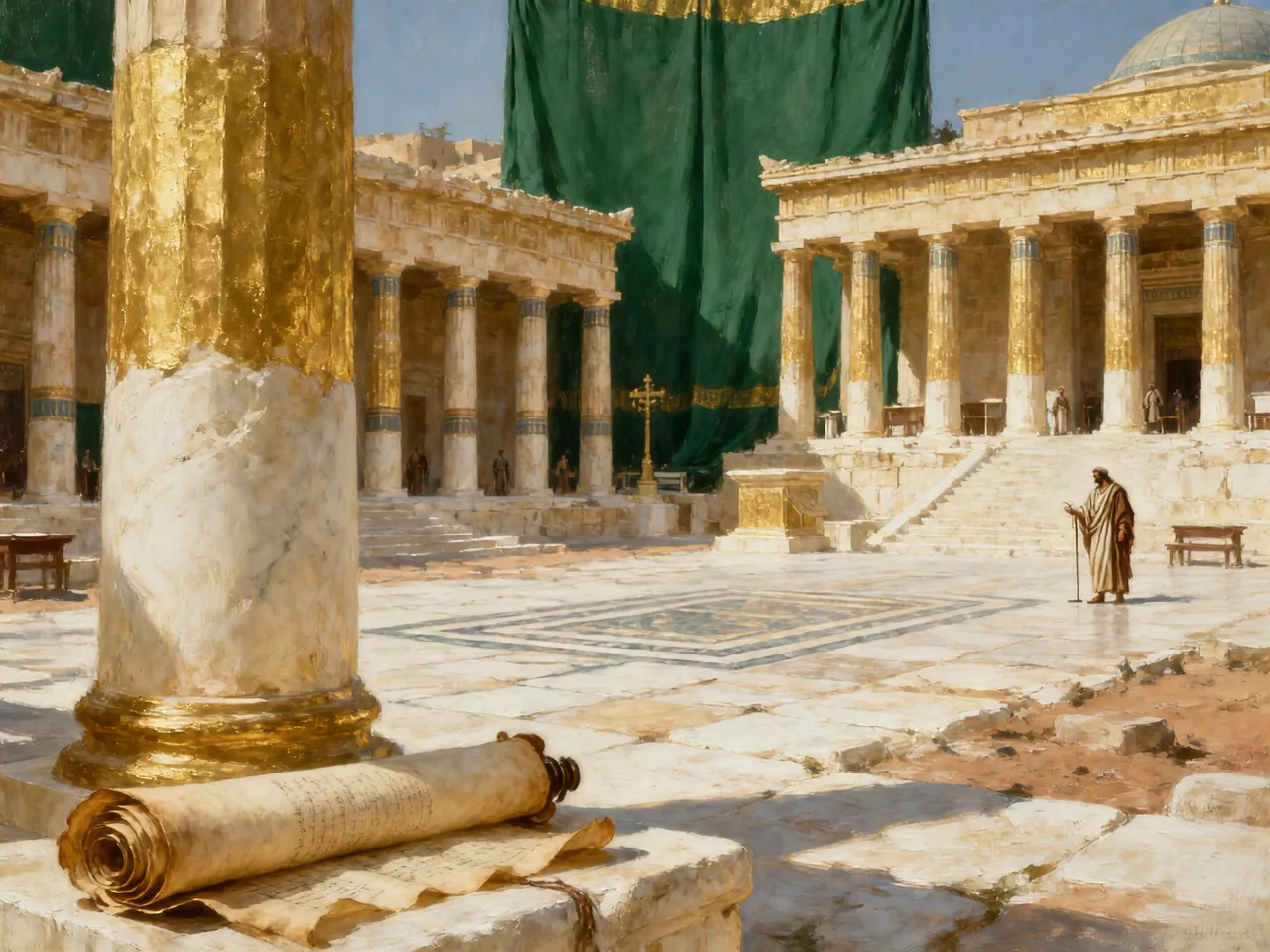
2 Early in the morning He went back into the temple courts. All the people came to Him, and He sat down to teach them.
3 The scribes and Pharisees, however, brought to Him a woman caught in adultery. They made her stand before them
4 and said, “Teacher, this woman was caught in the act of adultery.
5 In the Law Moses commanded us to stone such a woman. So what do You say?”
6 They said this to test Him, in order to have a basis for accusing Him. But Jesus bent down and began to write on the ground with His finger.
7 When they continued to question Him, He straightened up and said to them, “Let him who is without sin among you be the first to cast a stone at her.”
8 And again He bent down and wrote on the ground.
9 When they heard this, they began to go away one by one, beginning with the older ones, until only Jesus was left, with the woman standing there.
10 Then Jesus straightened up and asked her, “Woman, where are your accusers? Has no one condemned you?”
11 “No one, Lord,” she answered. “Then neither do I condemn you,” Jesus declared. “Now go and sin no more.”
Study guide · not Scripture
Meaning & context
Literary context · John 8:1–11
Why some Bibles bracket this passage
The USCCB note on John 7:53–8:11 explains that the story is absent from early Greek manuscripts and appears in different locations in others. It also states the Catholic Church's acceptance of it as canonical. Bibleward retains the exact passage supplied by its BSB corpus and discloses the issue; it does not silently reconstruct an imagined original version.
Sources: Berean Standard Bible: John 8 · USCCB: John 8 commentary
Scripture observation · John 8:2–6
1. The accusation is also a test of Jesus
The narrating voice identifies an intention to find grounds for accusing Jesus. The woman is placed in public view, while the speakers demand His judgment. Notice both levels of the scene: the danger to her and the attempt to trap Him. Reducing it to an abstract debate can make the vulnerable person disappear.
Sources: Berean Standard Bible: John 8
Scripture observation · John 8:6–9
2. The accusers leave one by one
Jesus writes on the ground and challenges the person without sin to begin the stoning. The text records the accusers' departure, starting with the older ones. It never tells us what He wrote. Lists of their sins, names, or a particular commandment may be imaginative interpretations, but they must not be presented as information the passage supplies.
Sources: Berean Standard Bible: John 8
Scripture observation · John 8:10–11
3. Mercy and change are not opposites here
Jesus asks the woman about her accusers, declines to condemn her, and tells her to leave sin. The ending does not approve everything that preceded it. At the same time, the call to change is not delivered through the threatened public violence. Keep both parts of His response in your account of the scene.
Sources: Berean Standard Bible: John 8
Textual and pastoral limits · John 8:3–11
No permission to silence someone who reports harm
This story is not a rule that only morally flawless people may report wrongdoing or seek protection. It should not be used to protect an abusive person from accountability. The manuscript discussion concerns how this passage was transmitted and received; it does not license changing the words inside the identified Bible translation or hiding uncertainty from readers.
Sources: Berean Standard Bible: John 8 · USCCB: John 8 commentary · Bibleward editorial method and reading itinerary
Optional pastoral application · John 8:6–11
Two questions to carry with you
Which details are actually present, and which have you encountered in retellings? What changes when you attend to the woman's safety as well as the argument? You may reflect privately without identifying anyone else's alleged wrongdoing. If a situation involves danger, seek appropriate protection and support rather than staging a confrontation based on this story.
Sources: Berean Standard Bible: John 8 · Bibleward editorial method and reading itinerary
Sources & review
Bibleward · AI-assisted study guide
Study guidance · not Scripture. AI-assisted writing and automated content review; no individual pastoral endorsement is claimed.
- Berean Standard Bible: John 8 — Exact BSB v5.9 local corpus and verified extraction; JHN.8. Public link is a reading aid, not the imported Scripture source.
- USCCB: John 8 commentary — Note on John 7:53–8:11: manuscript absence, varying placement, and the explicitly Catholic statement about canonical reception.
- Bibleward editorial method and reading itinerary — Local publication manifest, canonical roadmaps, review labels, and free-through-Day15 access rules. Product facts and editorial choices, not independent theological authority.
- Berean Bible: Licensing and Terms — Public-domain dedication effective April 30, 2023; no third-party commentary, images or recordings reproduced.
Scripture is the Berean Standard Bible (BSB), dedicated to the public domain. Exact Scripture remains separate from these original AI-assisted Bibleward explanations. Linked commentary is cited and summarized, not reproduced; no permission to reuse third-party prose or artwork is implied.
Report a content concernReflection, prayer, and reading progress stay in this browser; they are not synced to an account.