Day 18 · John 6:35–51 · Berean Standard Bible
John 6:35 explained: Jesus as the bread of life
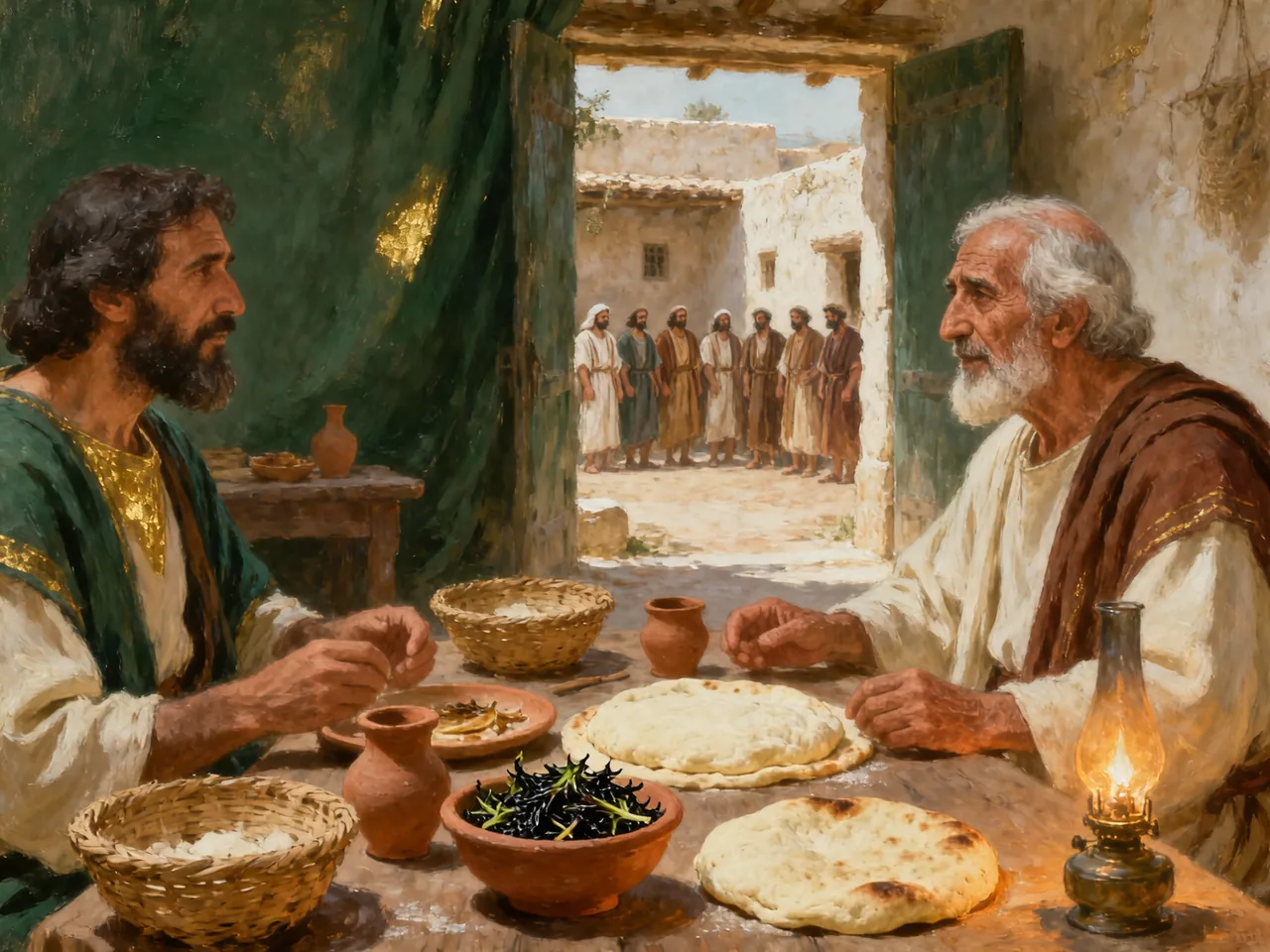
In John 6:35–51, Jesus identifies Himself as the bread of life and connects coming to Him with believing, eternal life, and resurrection. The image is not a promise that believers will never need ordinary food. It asks readers to consider the source of life Jesus claims to be, within a chapter that begins with a shared meal.
The Scripture text and this public explanation are free. Guided audio and the complete guided steps require Plus or a Journey Pass covering this day.
Jesus does not offer Himself as one more religious product that satisfies every immediate desire. He says He is the bread of life: the one who comes from the Father, receives those who come to Him, gives eternal life, and promises resurrection. His words reach their center in His gift of Himself for the life of the world. Christians share that center, while differing over how the passage relates to Communion.
John 6:35–51
35 Jesus answered, “I am the bread of life. Whoever comes to Me will never hunger, and whoever believes in Me will never thirst.
36 But as I stated, you have seen Me and still you do not believe.
37 Everyone the Father gives Me will come to Me, and the one who comes to Me I will never drive away.
38 For I have come down from heaven, not to do My own will, but to do the will of Him who sent Me.
39 And this is the will of Him who sent Me, that I shall lose none of those He has given Me, but raise them up at the last day.
40 For it is My Father’s will that everyone who looks to the Son and believes in Him shall have eternal life, and I will raise him up at the last day.”
41 At this, the Jews began to grumble about Jesus because He had said, “I am the bread that came down from heaven.”
42 They were asking, “Is this not Jesus, the son of Joseph, whose father and mother we know? How then can He say, ‘I have come down from heaven’?”
43 “Stop grumbling among yourselves,” Jesus replied.
44 “No one can come to Me unless the Father who sent Me draws him, and I will raise him up at the last day.
45 It is written in the Prophets: ‘And they will all be taught by God.’ Everyone who has heard the Father and learned from Him comes to Me —
46 not that anyone has seen the Father except the One who is from God; only He has seen the Father.
47 Truly, truly, I tell you, he who believes has eternal life.
48 I am the bread of life.
49 Your fathers ate the manna in the wilderness, yet they died.
50 This is the bread that comes down from heaven, so that anyone may eat of it and not die.
51 I am the living bread that came down from heaven. If anyone eats of this bread, he will live forever. And this bread, which I will give for the life of the world, is My flesh.”
Study guide · not Scripture
Meaning & context
Literary context · John 6:35–51
Read the speech after the feeding
John 6 first narrates the feeding of a crowd, then a conversation about bread from heaven. Day 18 selects part of that longer speech, not its entire argument. The USCCB commentary distinguishes the emphasis on revelation and belief through verse 50 from the stronger Eucharistic emphasis beginning at verse 51. That is a Catholic interpretive reading, identified here rather than treated as anonymous consensus.
Sources: Berean Standard Bible: John 6 · USCCB: John 6 commentary
Scripture observation · John 6:35–40
1. Coming and believing explain the image
The opening statement places coming to Jesus beside believing in Him. The following verses speak about receiving those who come and raising them at the last day. Read those verbs together. The passage's promise of life is larger than the satisfaction of an immediate appetite, though its bread image begins with a familiar human need.
Sources: Berean Standard Bible: John 6
Scripture observation · John 6:41–46
2. Familiarity does not settle identity
The listeners appeal to Jesus' known family when questioning His claim to have come from heaven. Jesus replies by speaking of the Father's action and teaching. The disagreement concerns His origin and authority; it does not justify a modern reader's contempt toward an ethnic or religious group. Jesus and the people in this conversation belong within a Jewish setting.
Sources: Berean Standard Bible: John 6
Scripture observation · John 6:47–51
3. Manna and lasting life are contrasted
The passage recalls ancestors who ate manna and still died. Jesus then describes a different gift of life and connects the bread He gives with His flesh. Verse 51 opens a further discussion that continues beyond today's selection. Read onward if you want to understand why the image prompts such intense questions.
Sources: Berean Standard Bible: John 6
Attributed interpretation · John 6:35–51
A sacramental question remains open
The linked Catholic notes explicitly read a Eucharistic dimension here. This short guide does not claim that all churches explain Communion or this passage identically. Nor does it settle debates about divine drawing and human response. It identifies the passage's language and directs you to discuss those questions with a teacher who names their tradition and reasoning.
Sources: Berean Standard Bible: John 6 · USCCB: John 6 commentary · Bibleward editorial method and reading itinerary
Optional pastoral application · John 6:35–40
Two questions to carry with you
Which verbs describe Jesus' action, and which describe the hearer's response? Write down one question about them before deciding what the bread image means. Hunger, illness, or continuing material need is not evidence that a reader has failed this passage. Religious language should never replace food, practical help, or appropriate care.
Sources: Berean Standard Bible: John 6 · Bibleward editorial method and reading itinerary
Sources & review
Bibleward · AI-assisted study guide
Study guidance · not Scripture. AI-assisted writing and automated content review; no individual pastoral endorsement is claimed.
- Berean Standard Bible: John 6 — Exact BSB v5.9 local corpus and verified extraction; JHN.6. Public link is a reading aid, not the imported Scripture source.
- USCCB: John 6 commentary — John 6:22–59; especially the note on 6:35–59. Catholic commentary's distinction between revelation and Eucharistic emphasis.
- Bibleward editorial method and reading itinerary — Local publication manifest, canonical roadmaps, review labels, and free-through-Day15 access rules. Product facts and editorial choices, not independent theological authority.
- Berean Bible: Licensing and Terms — Public-domain dedication effective April 30, 2023; no third-party commentary, images or recordings reproduced.
Scripture is the Berean Standard Bible (BSB), dedicated to the public domain. Exact Scripture remains separate from these original AI-assisted Bibleward explanations. Linked commentary is cited and summarized, not reproduced; no permission to reuse third-party prose or artwork is implied.
Report a content concernReflection, prayer, and reading progress stay in this browser; they are not synced to an account.