Day 25 · Acts 2:42–47 · Berean Standard Bible
Acts 2:42–47 explained: the early church's shared life
Acts 2:42–47 summarizes a community shaped by teaching, fellowship, shared bread, prayer, and practical attention to need. It is not simply a checklist for holding a successful meeting. Notice how worship and material care belong in the same description, and how the final verse attributes the community's growth to the Lord.
The Scripture text and this public explanation are free. Guided audio and the complete guided steps require Plus or a Journey Pass covering this day.
The first believers build a shared life around learning, worship, meals, prayer, generosity, and joy. Their possessions become resources for meeting actual needs. The passage invites churches to become communities of attention and care, but it does not authorize leaders to seize property, monitor private lives, or demand total access as proof of faith.
Acts 2:42–47
42 They devoted themselves to the apostles’ teaching and to the fellowship, to the breaking of bread and to prayer.
43 A sense of awe came over everyone, and the apostles performed many wonders and signs.
44 All the believers were together and had everything in common.
45 Selling their possessions and goods, they shared with anyone who was in need.
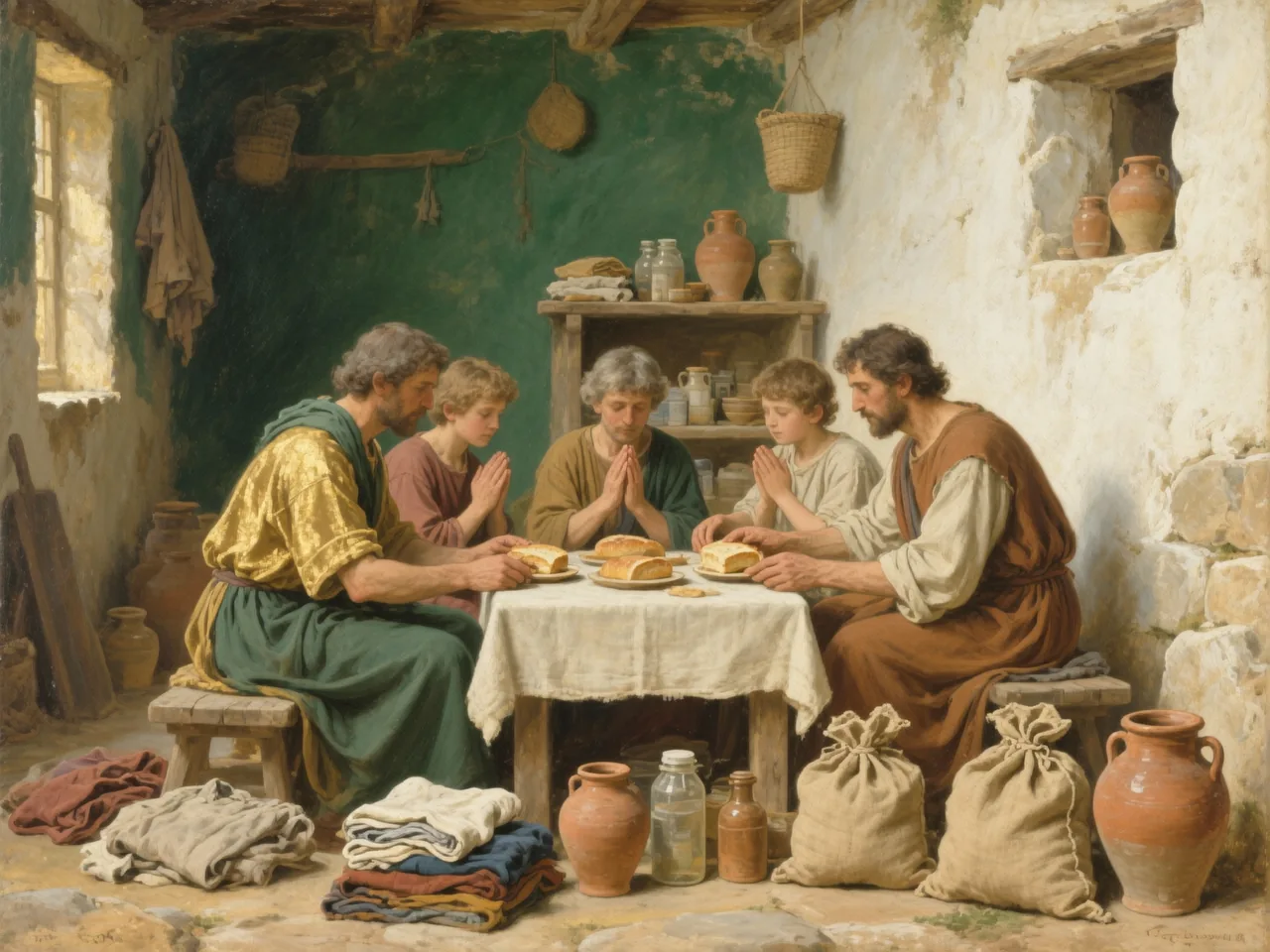
46 With one accord they continued to meet daily in the temple courts and to break bread from house to house, sharing their meals with gladness and sincerity of heart,
47 praising God and enjoying the favor of all the people. And the Lord added to their number daily those who were being saved.
Study guide · not Scripture
Meaning & context
Literary context · Acts 2:42–47
A summary after Peter's Pentecost speech
The passage follows the response to Peter's proclamation. The USCCB notes identify it as one of Acts' summary portraits of the Jerusalem community. Such a portrait concentrates important features in a few lines; it should not be mistaken for a complete diary of every member's experience or a modern organization's ready-made operating manual.
Sources: Berean Standard Bible: Acts 2 · USCCB: Acts 2 commentary
Scripture observation · Acts 2:42–43
1. Devotion has several connected practices
Teaching, fellowship, breaking bread, and prayer are named together. None is presented as a substitute for all the others. The account also describes awe and signs through the apostles. Before choosing a single feature as the secret of the church's life, read the entire opening description and its connection to the following verses.
Sources: Berean Standard Bible: Acts 2
Scripture observation · Acts 2:44–45
2. Sharing attends to actual need
The believers sell possessions and distribute resources to those in need. The direction of the movement matters: resources serve people, rather than people being valued by their contribution. This observation does not give a website or leader authority to demand that readers surrender savings, housing, or control over their financial decisions.
Sources: Berean Standard Bible: Acts 2
Scripture observation · Acts 2:46–47
3. Worship happens in more than one setting
The account includes the temple courts and meals in homes, with gladness and praise. These first believers are not portrayed as having simply abandoned their Jewish setting. The final statement about added numbers belongs to the story of God's action; it is not a promise that copying a meal format will produce predictable membership growth.
Sources: Berean Standard Bible: Acts 2
Attributed interpretation · Acts 2:42–47
Description is not a coercive financial rule
The USCCB notes read the breaking of bread in a Eucharistic frame. That identified Catholic reading should not be passed off as a complete account of every tradition's practice. Likewise, generosity is not permission for financial pressure, unsafe dependence, or making access to spiritual care conditional on a donation or purchase.
Sources: Berean Standard Bible: Acts 2 · USCCB: Acts 2 commentary · Bibleward editorial method and reading itinerary
Optional pastoral application · Acts 2:42–47
Two questions to carry with you
Which practice is easiest for you to notice, and which is easiest to overlook? A possible response is a modest offer of time, food, or attention where it is wanted. Ask about the need rather than assuming it. Declining an unsafe or unaffordable request does not make someone unfit for Christian community.
Sources: Berean Standard Bible: Acts 2 · Bibleward editorial method and reading itinerary
Sources & review
Bibleward · AI-assisted study guide
Study guidance · not Scripture. AI-assisted writing and automated content review; no individual pastoral endorsement is claimed.
- Berean Standard Bible: Acts 2 — Exact BSB v5.9 local corpus and verified extraction; ACT.2. Public link is a reading aid, not the imported Scripture source.
- USCCB: Acts 2 commentary — Acts 2:42–47 note: summary portrait, teaching, distribution according to need, and continued temple attendance.
- Bibleward editorial method and reading itinerary — Local publication manifest, canonical roadmaps, review labels, and free-through-Day15 access rules. Product facts and editorial choices, not independent theological authority.
- Berean Bible: Licensing and Terms — Public-domain dedication effective April 30, 2023; no third-party commentary, images or recordings reproduced.
Scripture is the Berean Standard Bible (BSB), dedicated to the public domain. Exact Scripture remains separate from these original AI-assisted Bibleward explanations. Linked commentary is cited and summarized, not reproduced; no permission to reuse third-party prose or artwork is implied.
Report a content concernReflection, prayer, and reading progress stay in this browser; they are not synced to an account.