Day 14 · Matthew 11:25–30 · Berean Standard Bible
Matthew 11:28 explained: rest for the weary
Matthew 11:28 invites weary people to come to Jesus for rest. The surrounding verses explain that invitation through knowing the Father and learning from a gentle teacher. The promise should be read with Jesus' invitation to take his yoke, not detached as a guarantee of an effortless life.
This guided day and both English narrators are free. No account is needed.
Jesus does not merely offer a technique for relaxation; He invites burdened people to come to Him. His rest includes learning His way and carrying His yoke, yet His authority is gentle and humble rather than crushing. This passage can comfort exhausted people, but it should never be used to deny sleep, treatment, practical help, or relief from abusive demands.
Matthew 11:25–30
25 At that time Jesus declared, “I praise You, Father, Lord of heaven and earth, because You have hidden these things from the wise and learned, and revealed them to little children.
26 Yes, Father, for this was well-pleasing in Your sight.
27 All things have been entrusted to Me by My Father. No one knows the Son except the Father, and no one knows the Father except the Son and those to whom the Son chooses to reveal Him.
28 Come to Me, all you who are weary and burdened, and I will give you rest.
29 Take My yoke upon you and learn from Me, for I am gentle and humble in heart, and you will find rest for your souls.
30 For My yoke is easy and My burden is light.”
Study guide · not Scripture
Meaning & context
Historical & literary context · Matthew 11:25–30
Read the invitation with what comes before it
Matthew 11 contains questions and divided responses concerning Jesus. In verses 25–27, he speaks about the Father's revelation and the relationship between Father and Son. Jennifer Kaalund's commentary connects this setting with recognizing Jesus and receiving instruction. The invitation to rest grows out of that context.
Sources: Matthew 11 — Berean Standard Bible · Commentary on Matthew 11:16–19, 25–30
Scripture observation · Matthew 11:25–29
1. Understanding is received, not displayed
Jesus thanks the Father for revealing what has been hidden from the wise and learned to little children. Verse 25 unsettles the assumption that status or intellectual confidence guarantees understanding. It does not require a beginner to despise learning; the passage itself soon invites people to learn.
Sources: Matthew 11 — Berean Standard Bible
Scripture observation · Matthew 11:28–29
2. The invitation is personal
In verses 28–29, Jesus calls the weary to himself and invites them to learn from him. The emphasis is not simply on finding an effective relaxation method. Read the promise alongside the character he describes: gentleness and humility. Who gives the invitation matters as much as the word rest.
Sources: Matthew 11 — Berean Standard Bible
Historical interpretation · Matthew 11:29–30
3. A yoke points to a way of learning
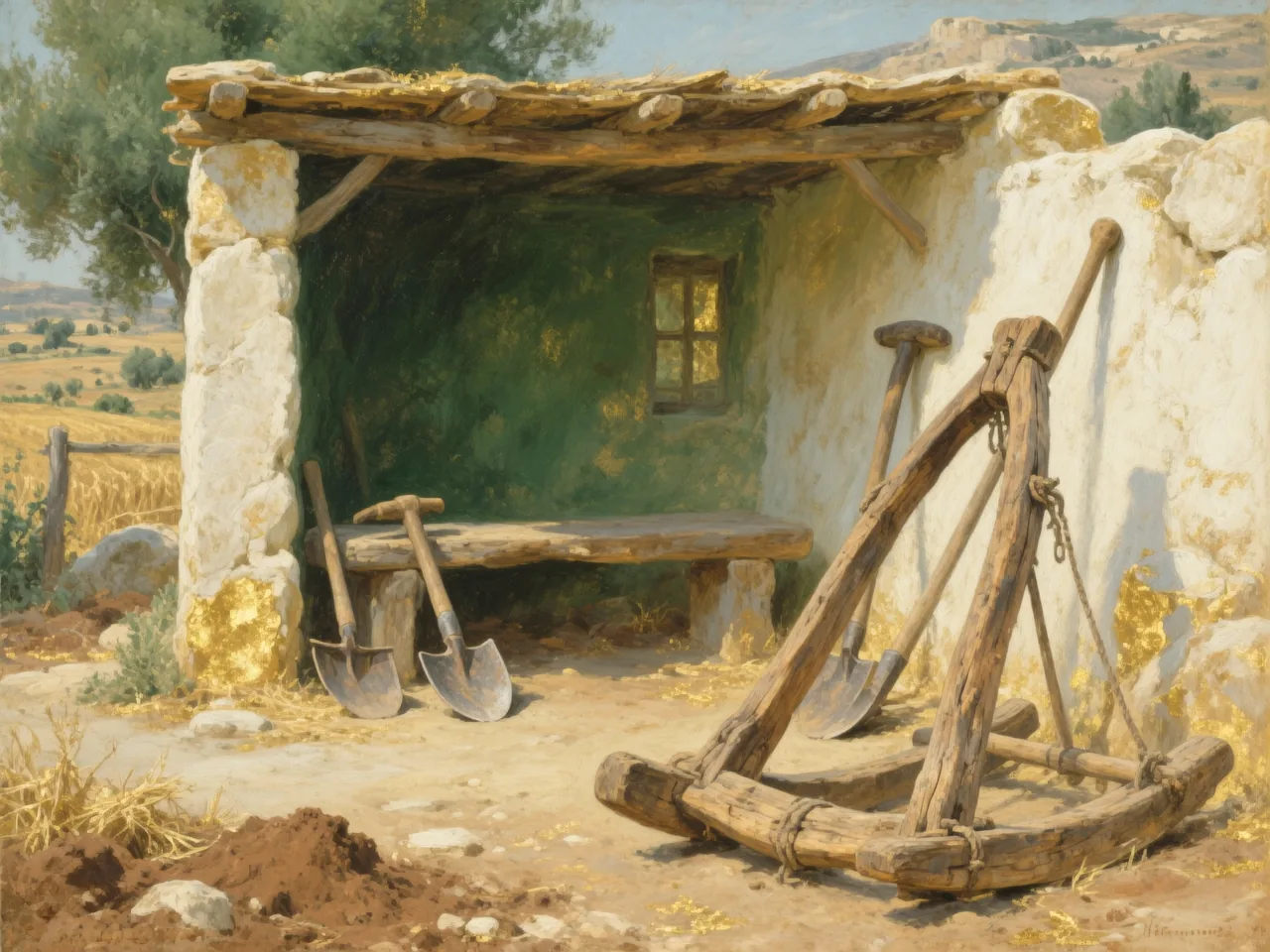
A yoke is an image of bearing a load under direction. Kaalund notes its use for obedience to Torah in rabbinic literature. Here Jesus joins the image to learning from him. This helps explain why rest and discipleship appear together: the invitation is not a command to do nothing.
Sources: Matthew 11 — Berean Standard Bible · Commentary on Matthew 11:16–19, 25–30
Editorial inference · Matthew 11:28–30
Gentleness does not make suffering trivial
The passage names weariness rather than denying it. It does not give a timetable for every burden to disappear, nor does it make exhaustion evidence of failed faith. Applying its language of rest to your circumstances requires care; a short guide cannot know the weight you carry.
Sources: Matthew 11 — Berean Standard Bible
Pastoral application · Matthew 11:28–30
Choose a small, unforced response
You could identify one burden and one small opportunity to pause or receive support. You may also simply reread the invitation. No streak, purchase, or completed exercise can prove that you have received rest. This reading should not add another demand to an already heavy day.
Sources: Matthew 11 — Berean Standard Bible
Sources & review
Bibleward · AI-assisted study guide
AI-assisted explanation; sources and Scripture references checked by automated review on September 11, 2026. This is not a recorded human pastoral approval.
- Matthew 11 — Berean Standard Bible — Matthew 11:25–30; exact reading supplied by local checksum-verified BSB v5.9.
- Commentary on Matthew 11:16–19, 25–30 — July 5, 2020; Matthew 11's question about Jesus, revelation in verse 25, and the yoke as instruction and obedience.
- Berean Bible: Licensing and Terms — Public-domain dedication effective April 30, 2023; all uses permitted. Third-party commentary has not been reproduced.
Scripture is the Berean Standard Bible (BSB), dedicated to the public domain. Exact Scripture remains separate from these original AI-assisted Bibleward explanations. Linked commentary is cited and summarized, not reproduced; no permission to reuse third-party prose or artwork is implied.
Report a content concernReflection, prayer, and reading progress stay in this browser; they are not synced to an account.