Verified event · checked 5 October 2026
Fifteen objects, and the histories behind them
On 22 September, the Manhattan District Attorney’s Office announced the return of 15 antiquities, valued together at nearly $3 million, to Greece. The office said all had been seized from the Metropolitan Museum of Art through multiple investigations into trafficking networks.
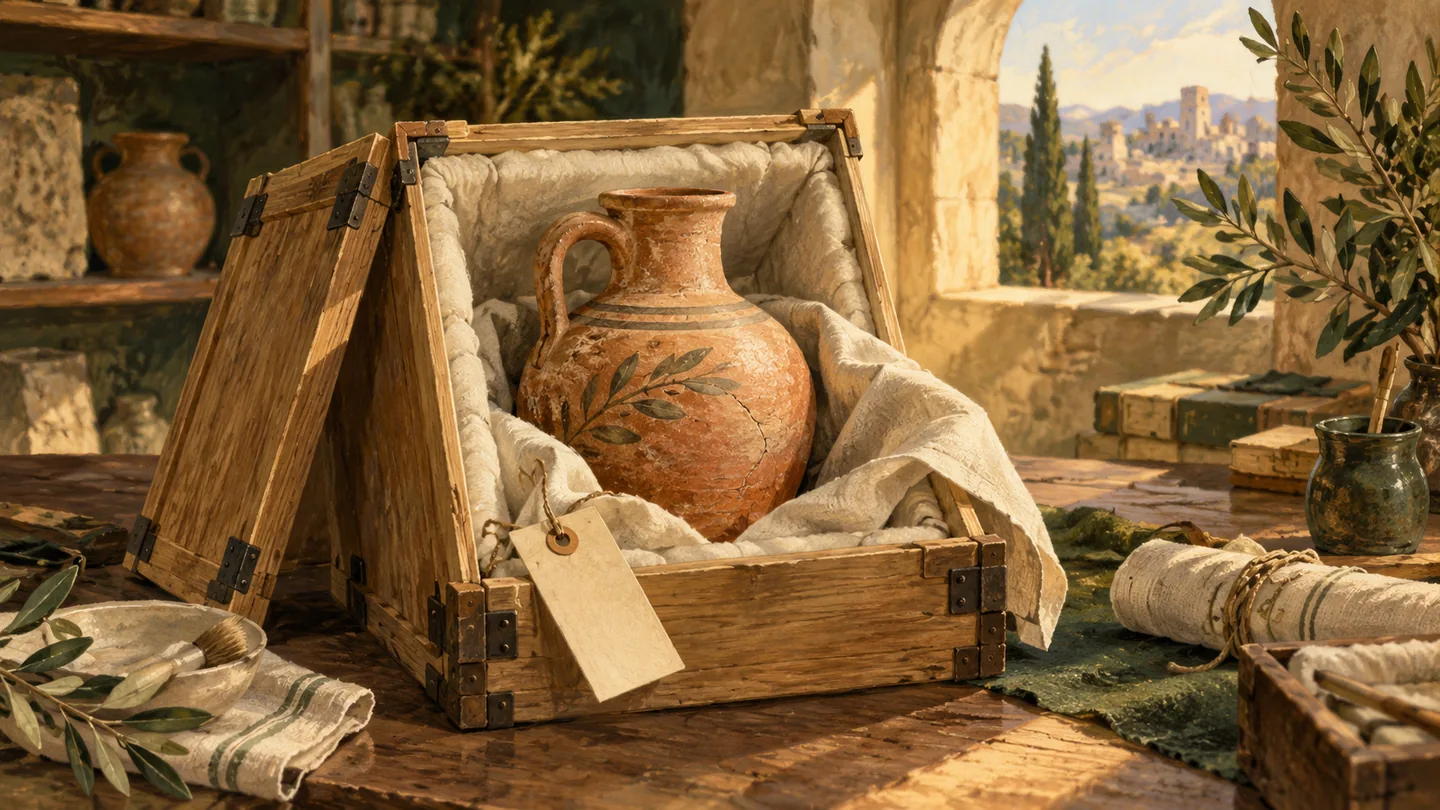
According to the announcement, the objects had been smuggled and given misleading histories through dealers, collectors, exhibitions, and donations. The return included bronze objects from a site at Afrati, Crete, and a terracotta jug. Those are the office’s findings; this article makes no additional allegation about the knowledge or motives of individual museum employees.
The news gives us a specific act to consider: objects changed hands. Public acknowledgment was accompanied by the surrender of something valuable. That is where the question of restitution becomes tangible.
Sources: D.A. Bragg Announces Return Of 15 Antiquities To The People Of Greece
Editorial reflection
An apology can leave the benefit of a wrong untouched
Restitution means returning what is owed or making compensation for a loss. It asks a practical question that an apology may leave open: after the regret has been expressed, who still holds the benefit, and who is still living with the cost?
That question can be difficult even when the circumstances are much smaller than a museum collection. Imagine discovering that you were paid twice, credited for work someone else did, or allowed to keep property that was never yours. These are hypothetical examples, not reported testimonies. In each case, an honest response may require more than feeling sorry.
A Bible story cannot establish an artifact’s ownership record. It can help us consider why giving something back may belong inside a response to harm.
Sources: Bibleward editorial method
Scripture in context · Luke 19:1–7
Jesus stops beneath a tree in Jericho
Luke 19:1–10 tells a compact story about Zacchaeus, a wealthy chief tax collector. He wants to see Jesus, but the crowd and his height prevent him. He runs ahead and climbs a sycamore tree along the route. The first movement of the scene is a man trying to see without yet entering a conversation.
Jesus reaches the tree, looks up, calls Zacchaeus by name, and tells him to come down because He will stay at his house that day. Zacchaeus comes down quickly and welcomes Him with joy. Other people object to Jesus becoming the guest of someone they regard as sinful.
Keep that order in view. Jesus initiates the encounter before Luke reports Zacchaeus’s statement about his possessions. The story is more than a lesson in better accounting. It places a disputed welcome beside the question of what happens to money and to people who have been harmed.
Sources: Luke 19 · Berean Standard Bible
Scripture in context · Luke 19:8–10
Zacchaeus names both sharing and repayment
Zacchaeus then stands and says he gives half his possessions to the poor and will repay four times as much if he has cheated anyone. The two parts concern different recipients: people in need, and people to whom he may owe repair. His words make the response materially specific.
Jesus declares that salvation has come to this household, identifies Zacchaeus as a son of Abraham, and explains His mission in terms of seeking and saving the lost. Luke ends the episode with Jesus’ purpose, rather than leaving the size of the repayment as the final word.
We should not turn that sequence into a price list for salvation. Zacchaeus does not negotiate a donation fee before Jesus will approach him. Nor does the passage say that a wealthy person can purchase the right to harm others by supporting a good cause afterward. In this reading, welcome and responsibility meet inside the same encounter.
The fourfold amount is part of Zacchaeus’s statement in this particular scene. It is not a formula this article can impose on a modern reader’s legal or financial situation. Different losses require different kinds of repair, and some harms cannot be undone by money.
Sources: Luke 19 · Berean Standard Bible
Optional application
Ask what repair would mean for the person affected
The distinction between giving and repaying is worth carrying into ordinary life. A generous gesture toward one person does not automatically settle a debt to another. If I kept credit that belonged to a colleague, a charitable donation elsewhere would leave that colleague’s loss untouched.
A first step could be to name the benefit you still hold. Is there money to return, a record to correct, or credit to acknowledge? Then consider the person affected and what they are actually owed. Where ownership or liability is disputed, appropriate professional advice and lawful procedures matter; this reflection does not determine the answer.
Repair also leaves the other person free. Returning what is owed does not entitle us to immediate forgiveness, gratitude, restored trust, or a public statement that everything is fine. We can take responsibility without demanding that someone else complete the ending we would prefer.
Sources: Luke 19 · Berean Standard Bible
Private reflection · no response required
What would change hands?
Read Luke 19:1–10 again. Notice who begins the encounter, what Zacchaeus offers, and how Jesus explains His purpose. Then ask: is there a situation in which my words of regret have left the practical problem unchanged?
One next step may be small and exact: correct an attribution, check an amount owed, or seek advice about a disputed obligation. The point is not to invent guilt or force a dramatic gesture. It is to let an honest recognition, where there is one, become an honest action.
Sources: Luke 19 · Berean Standard Bible
Sources and further reading
- D.A. Bragg Announces Return Of 15 Antiquities To The People Of Greece
22 September 2026 announcement: 15 antiquities, nearly $3 million, all seized from the Metropolitan Museum of Art in multiple trafficking investigations. Office describes false provenance, exhibitions and donations; no claim made here about any named museum employee’s criminal intent.
- Luke 19 · Berean Standard Bible
Luke 19:1–10: Zacchaeus, Jesus’ invitation, reception, crowd reaction, restitution statement, and Jesus’ concluding explanation. Verified against checksum-pinned BSB v5.9 canonical records. The chapter link is for reading, not a source for the page’s added commentary.
- Berean Bible: Terms and Conditions
Public-domain dedication effective 30 April 2023; all uses permitted. Scripture below is original paraphrase, never presented as translation text.
- Bibleward editorial method
First-party editorial policy. Sections citing this entry are original reflection or suggested practice, not independently reported facts or Scripture quotations.
Study guidance · not Scripture. AI-assisted writing and automated content review; no individual pastoral endorsement is claimed.